Cool Merchandise for B2B that feels on-brand
Cool Merchandise isn’t about trendy items—it’s about brand-fit design on products people actually use. This guide gives you a simple selection framework and real brand examples, plus matching merch items that support the look instead of fighting it.

Even premium merch can fail if it looks like “promotional stuff.” In B2B, that usually happens for three reasons: the branding is too loud, the product doesn’t match daily routines, or the design language isn’t consistent across items. The result is predictable: it gets noticed once, then disappears into a drawer.
A better approach is to treat merch like an extension of your brand system. Decide how your identity should show up “in real life” (minimal, playful, bold), then pick products that carry that look naturally. That’s how Cool Merchandise becomes wearable, useful, and shareable—without feeling salesy.
Cool Merchandise starts with cool branding
“Cool” rarely comes from the item alone. It comes from whether the branding looks like it belongs on the product. Minimal, tone-on-tone branding is often the safest route because it feels premium and intentional. For younger or more expressive brands, bolder branding can work—if it’s consistent and clearly designed, not slapped on as an afterthought.
The key is repeatability. Strong merch can scale because the system is clear: a stable color palette, consistent typography, and defined placements. If you set these guardrails first, you can create Cool Merchandise across different categories without reinventing the design every time.
Cool Merchandise ideas that people keep using
The simplest filter is a routine question: will someone still use this in 30 days? Tote bags, bottles, socks, and quality tees tend to win because they fit daily habits. That’s the difference between Cool Merchandise ideas and “nice concepts”—routines don’t need explanations, they simply happen.
The second filter is context. For internal teams, usability and comfort come first. For events and community moments, visibility and photo-readability matter more. For customers or partners, lifestyle feel beats “corporate gift.” If you define the use case clearly, it’s much easier to decide on materials, placement, and finishing.
Two branding routes that reliably work
Tone-on-tone works when your brand leans modern, minimal, or premium. Small marks, clean placements, and high-quality finishing create a “designed product” feel—something people want to wear and carry without feeling like a billboard.
Bold branding works when your visual identity is already strong and your team embraces it. The rule is: don’t do it halfway. Use clear typographic hierarchy, confident shapes, and stay strict with your palette. “A little bold” often reads as messy; a consistent, intentional statement reads as brand.
Cool Merchandise ideas from real brands
Below you’ll find Cool Merchandise ideas from the real world: concrete examples from established brands where merch doesn’t feel like a giveaway, but like an extension of identity—so it gets kept, used, and shared.
Klarna
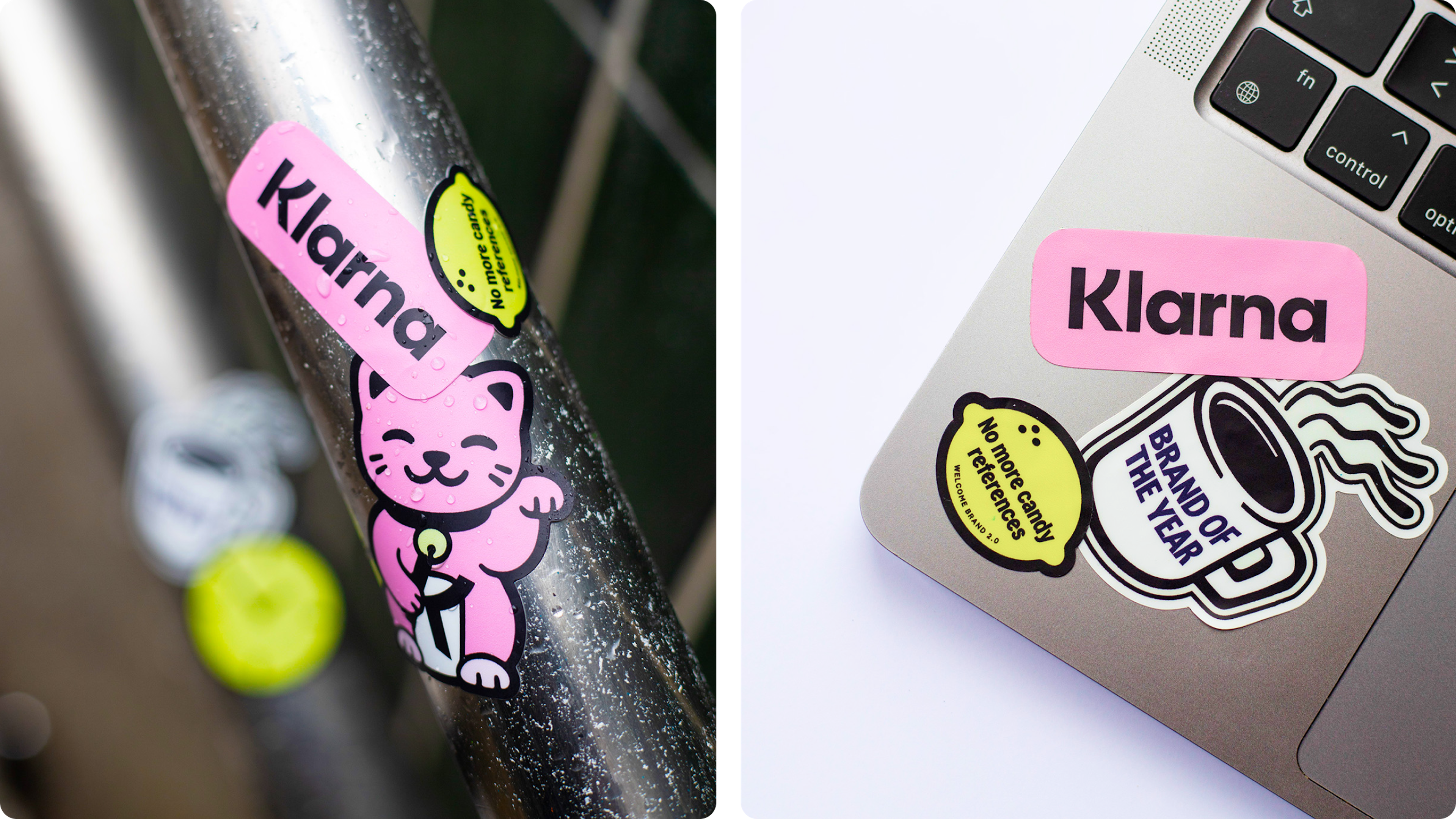
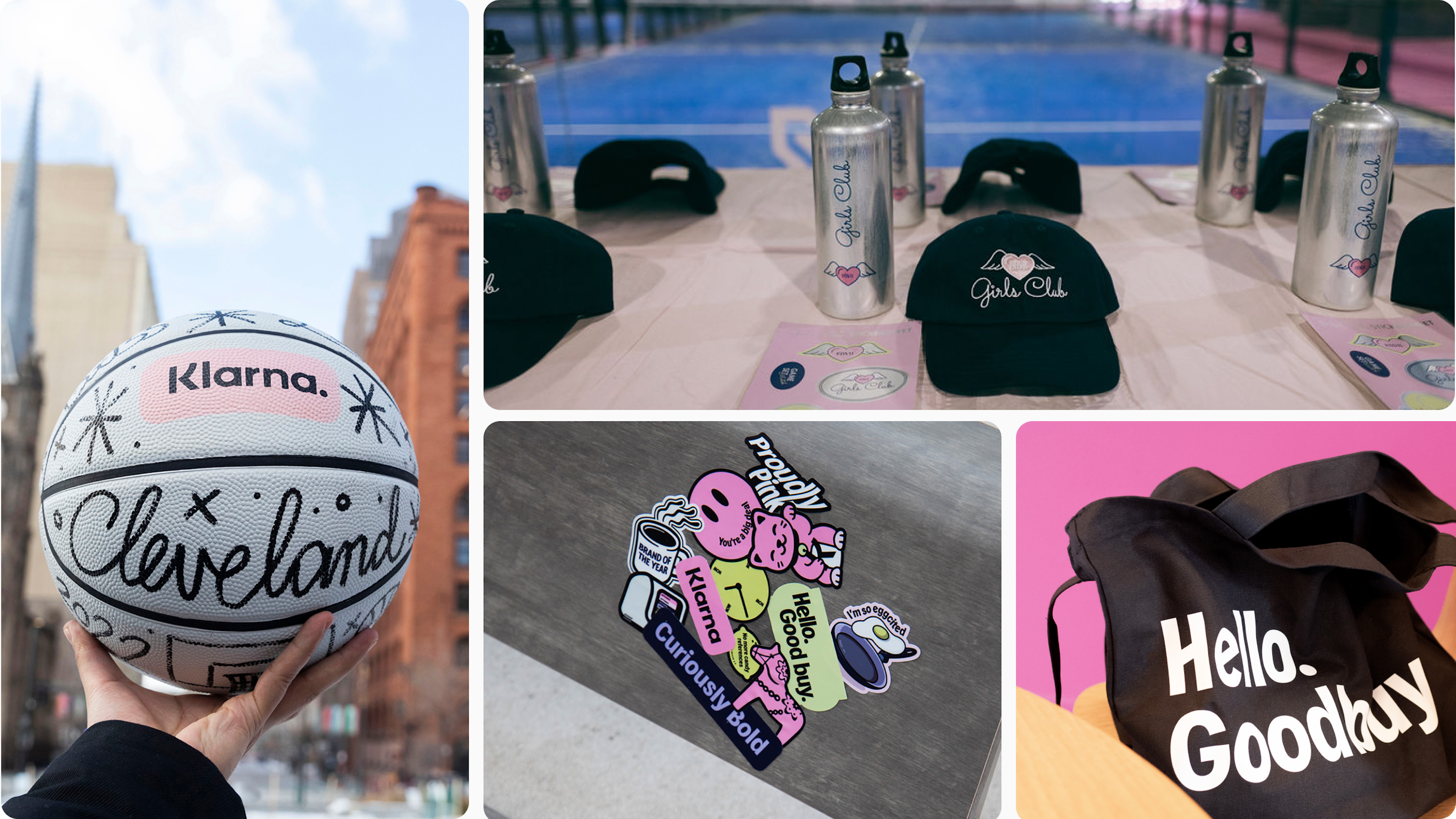
Klarna is a payment service provider that makes online shopping smoother—and that mix of fintech and pop culture shows up in its merch style. The look can feel playful and unexpected, but it stays disciplined. Recognition comes less from a giant logo and more from consistent colors and a clear visual “mood.” That’s why even unusual items feel like part of the brand—not like random giveaways.
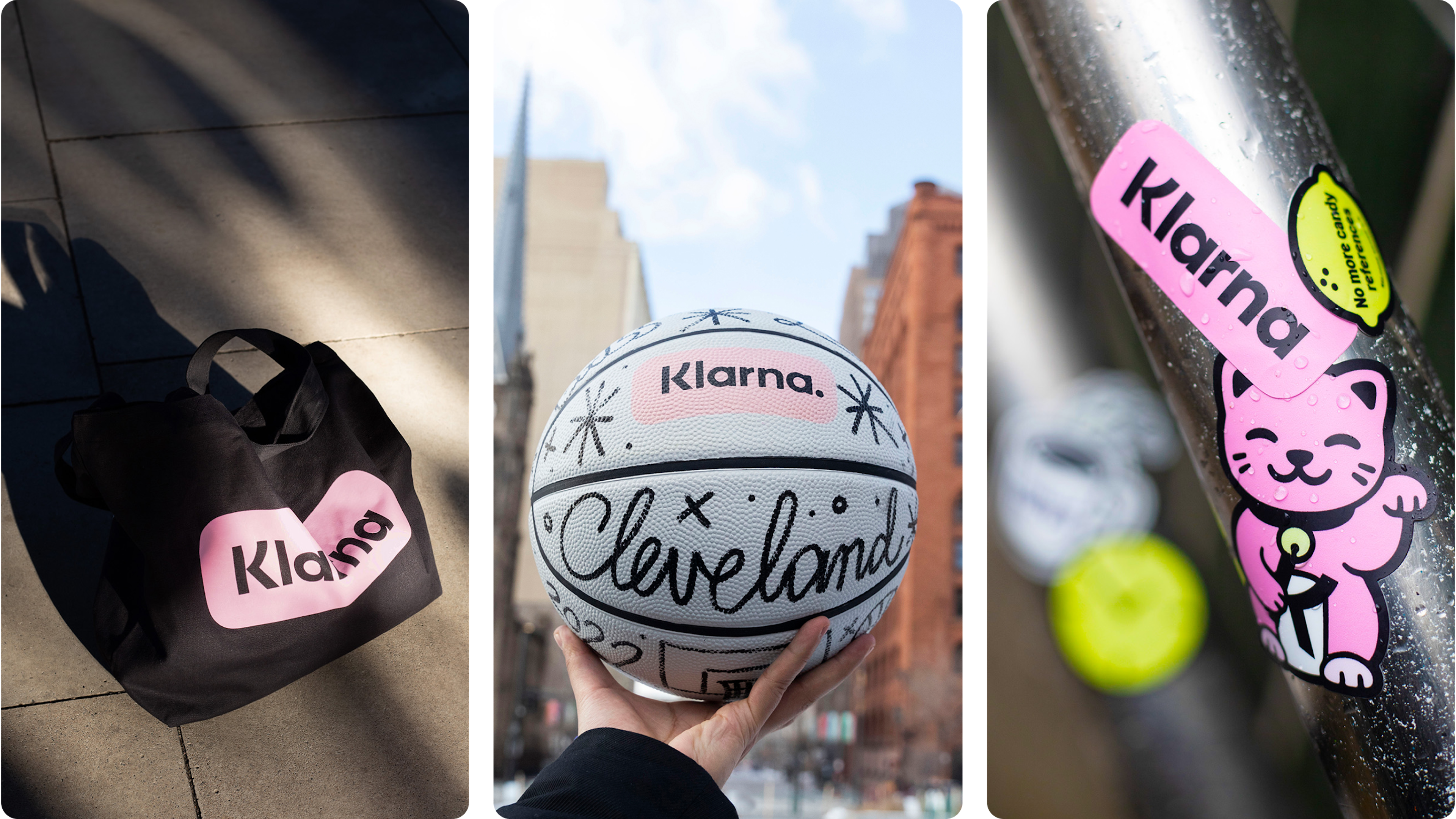
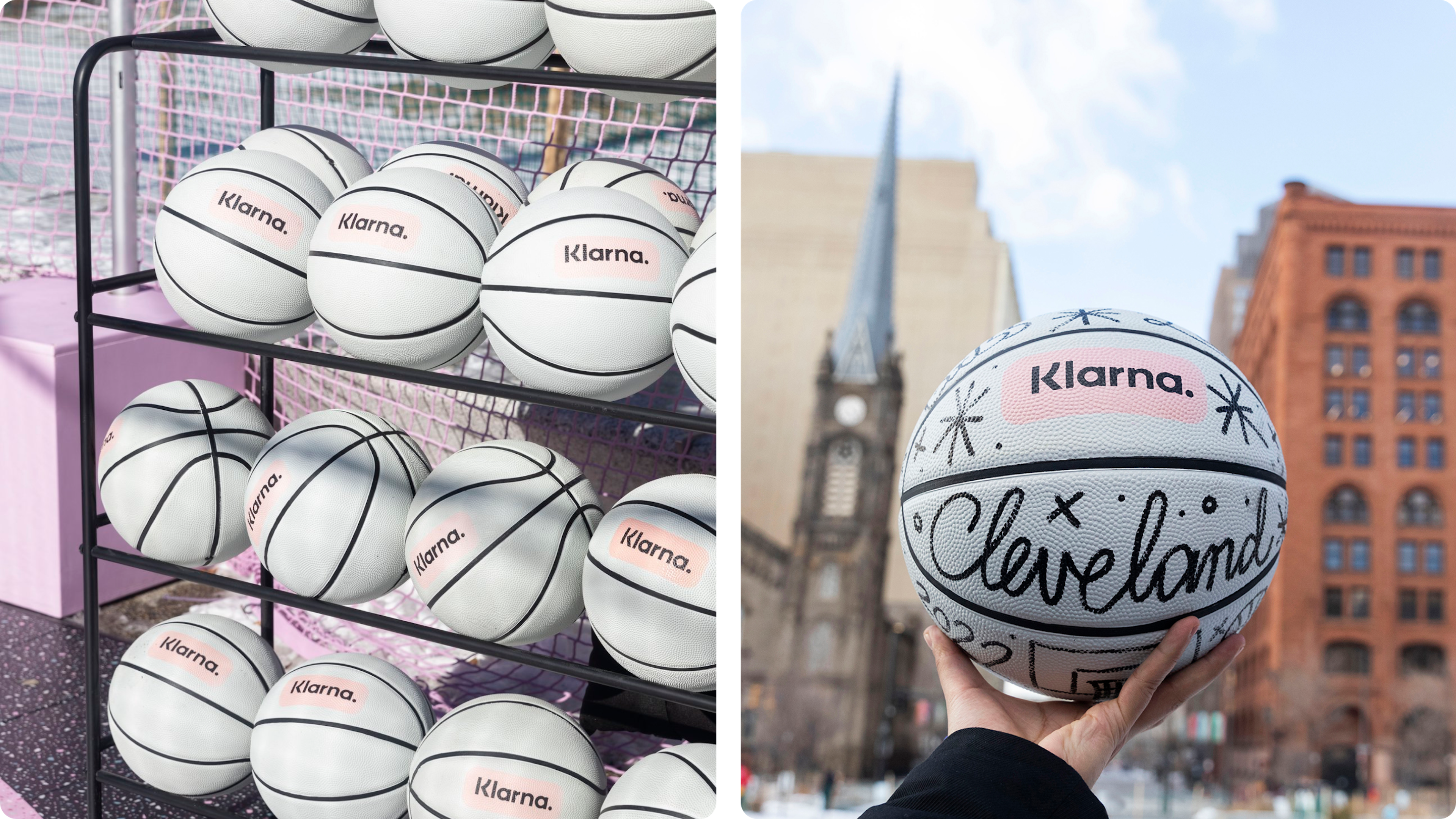
Toys
Toys can work as merch when they’re a real brand statement, not a joke item. In Klarna’s style, this fits launches, campaigns, or community drops—moments where “unexpected” supports the identity. The design rule stays the same: the branding needs to be integrated into the look and palette, not added like a last-minute label.
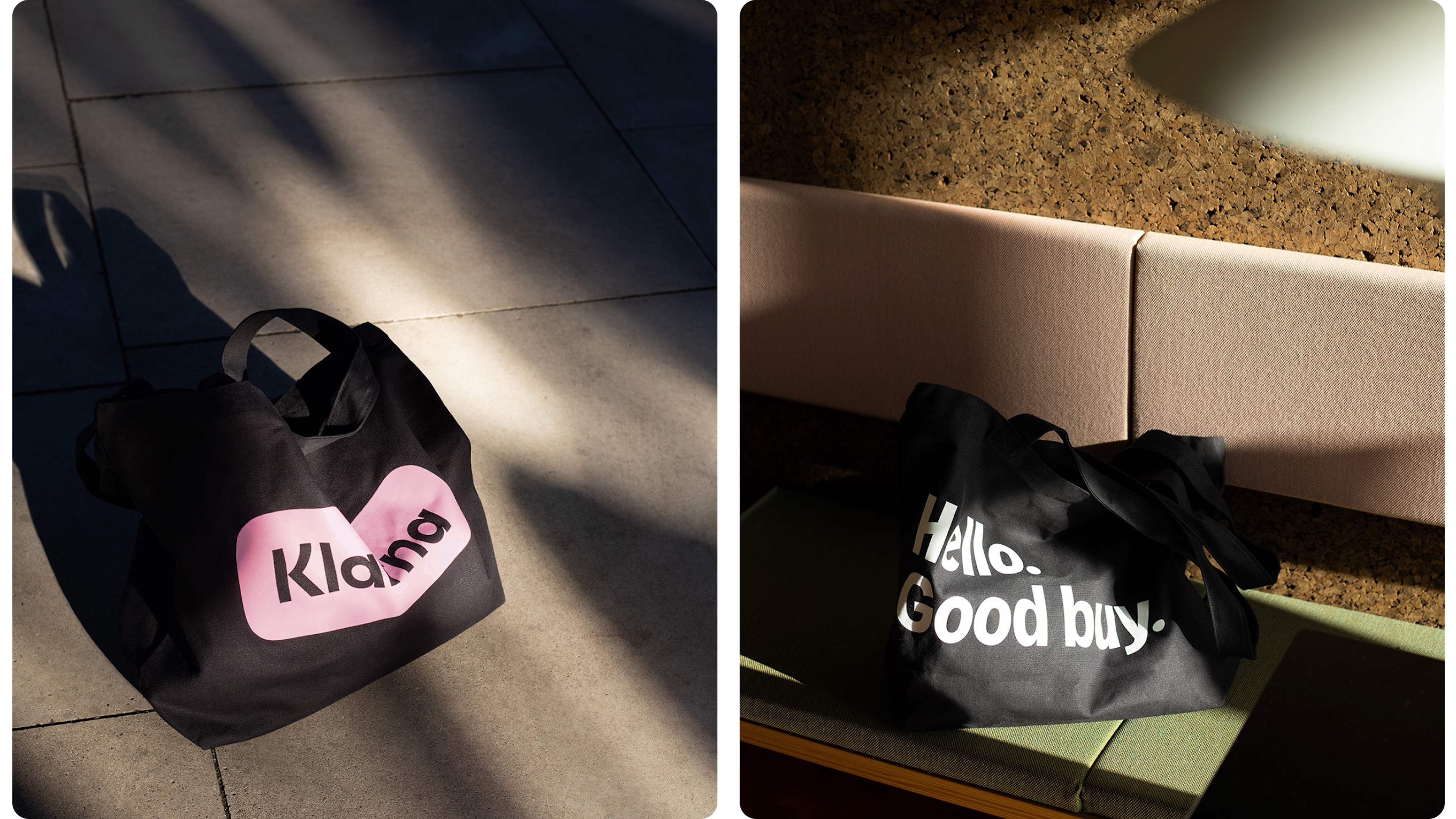
Tote bags
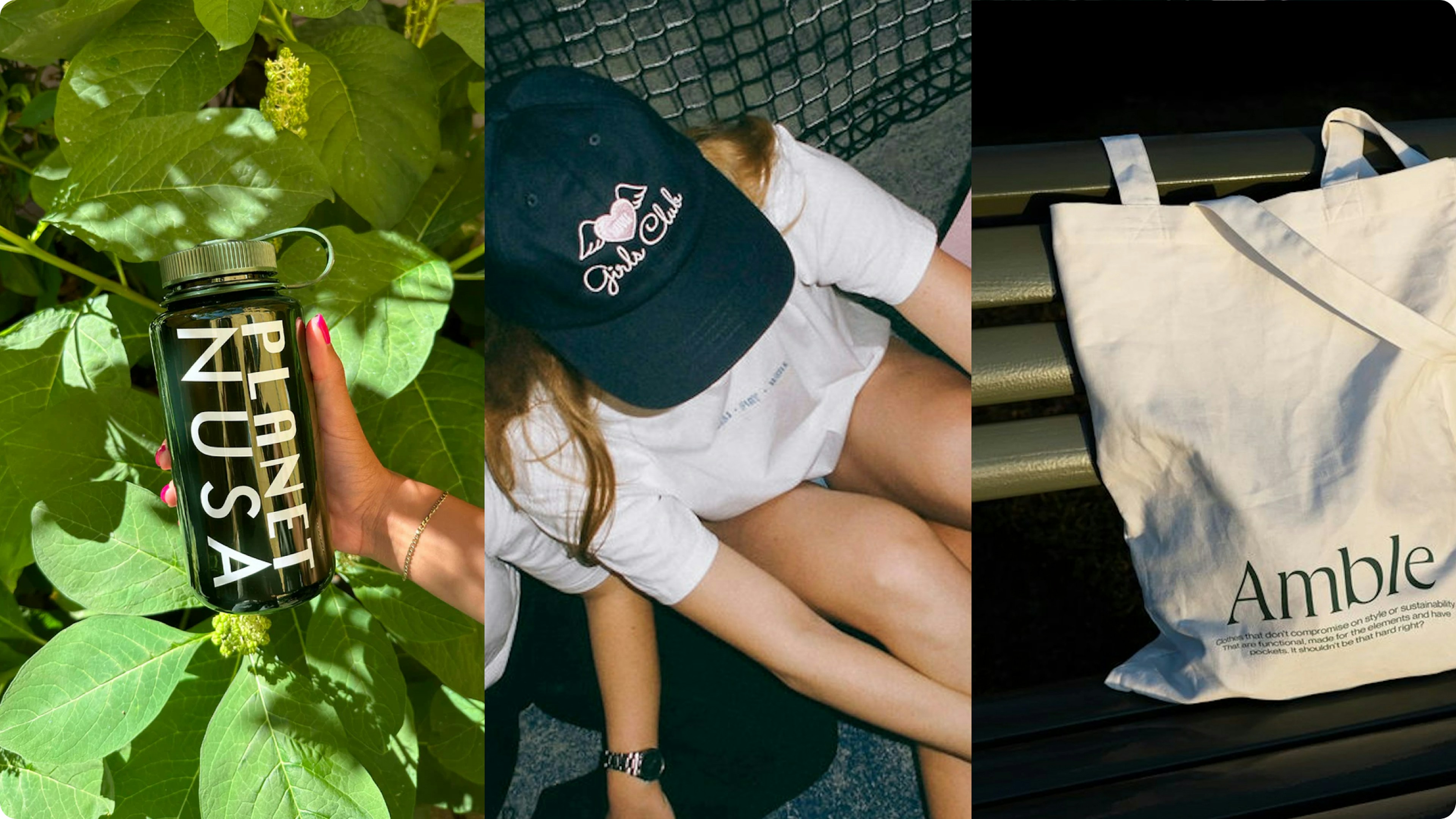
A custom logo tote bag becomes genuinely useful when the material and print quality match the brand. In a vibrant style, the bag can be bolder—if it still feels like one coherent design. For teams it’s a daily companion; for events it’s mobile brand visibility without “promo” energy.
Stickers as add-ons
Stickers are strongest as packaging and laptop add-ons. They extend the brand into everyday surfaces while keeping the “main gift” premium and grown-up. Used this way, they support Cool Merchandise without turning the whole set into cheap swag.
Memobottle
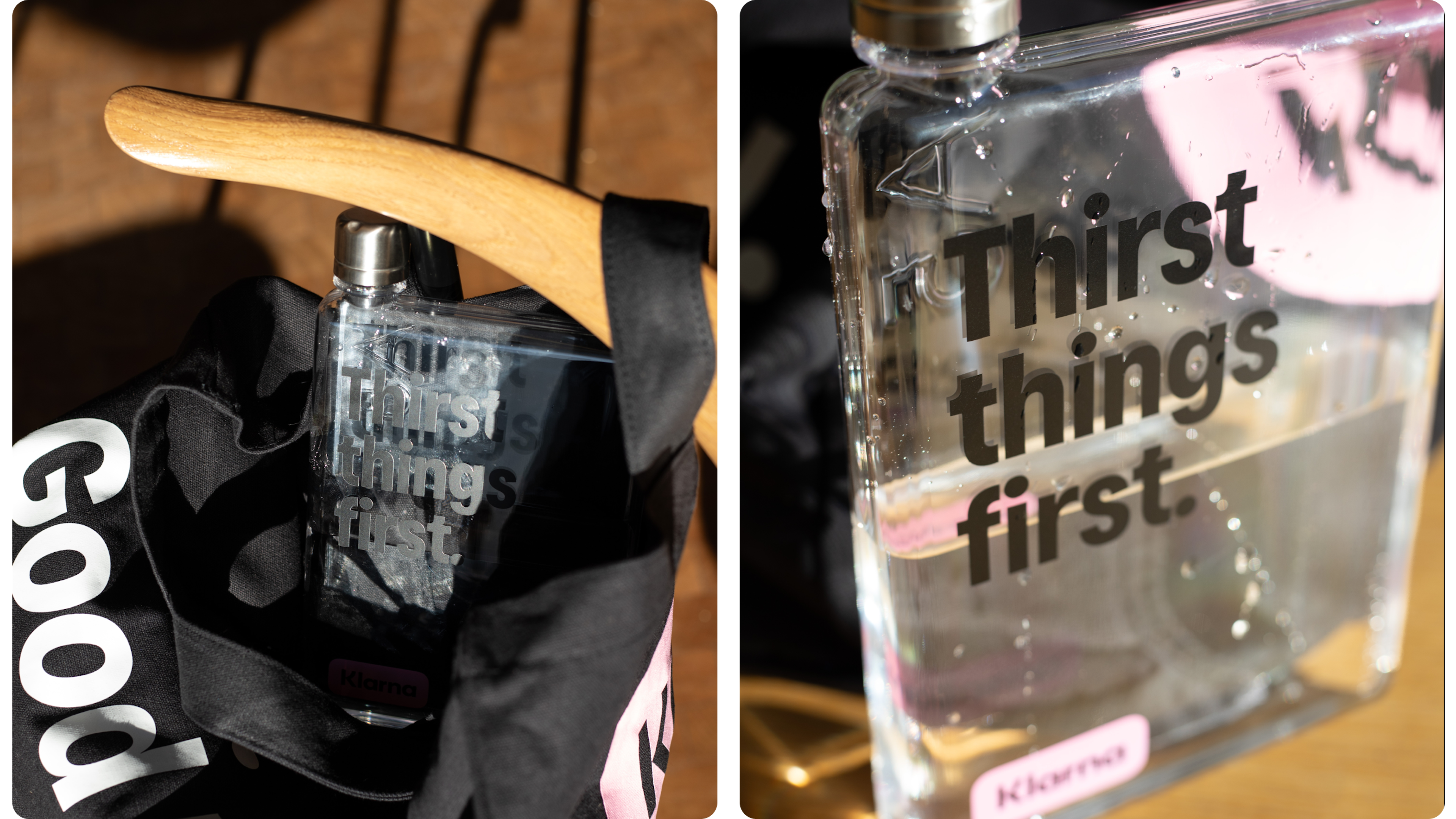
A personalised memobottle works when you want modern, design-led merch. The shape is clean, so branding can stay subtle and still feel intentional. In offices, meetings, and coworking spaces, it reads as lifestyle—exactly what you want from Cool Merchandise.
Templaty
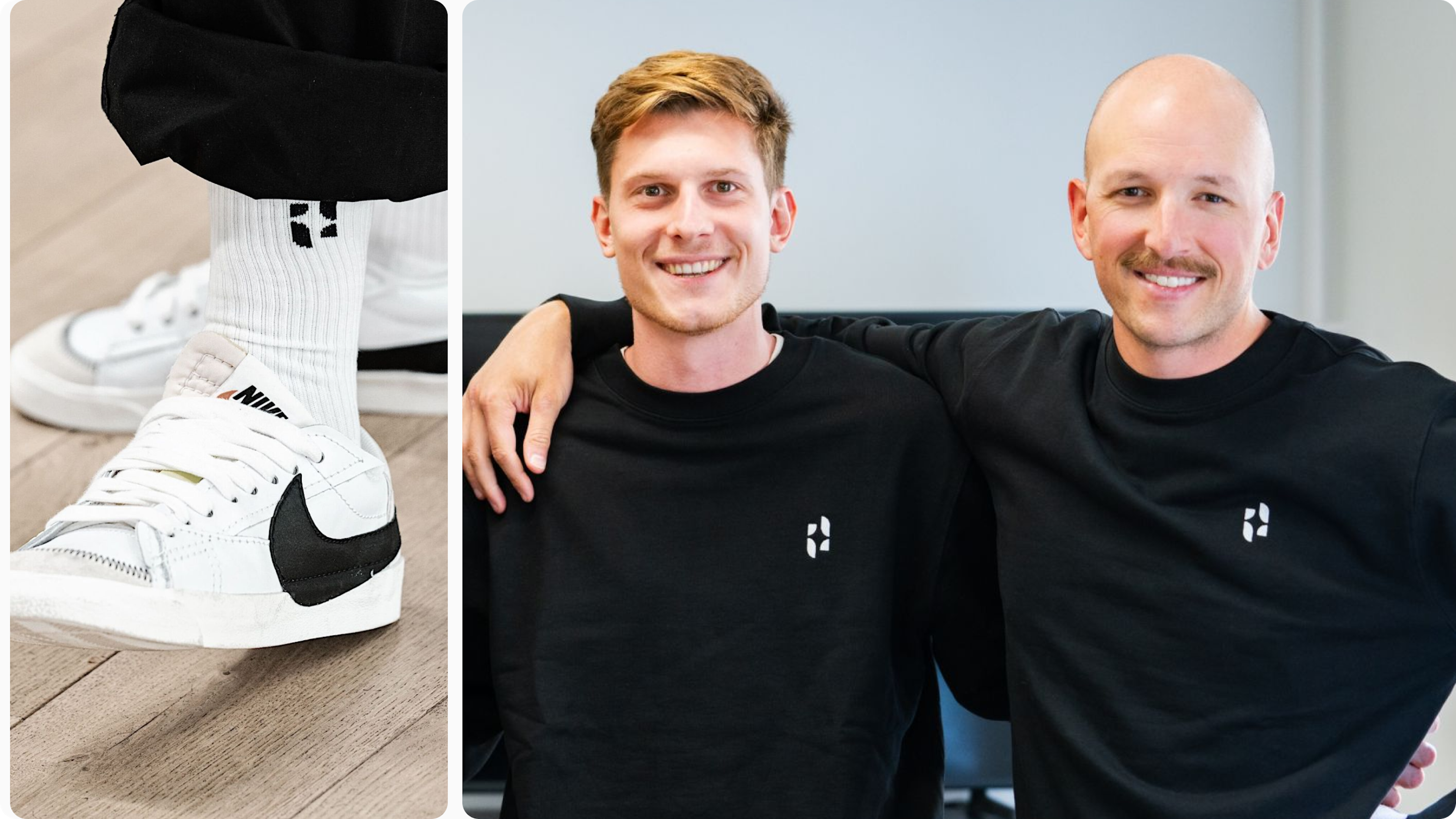
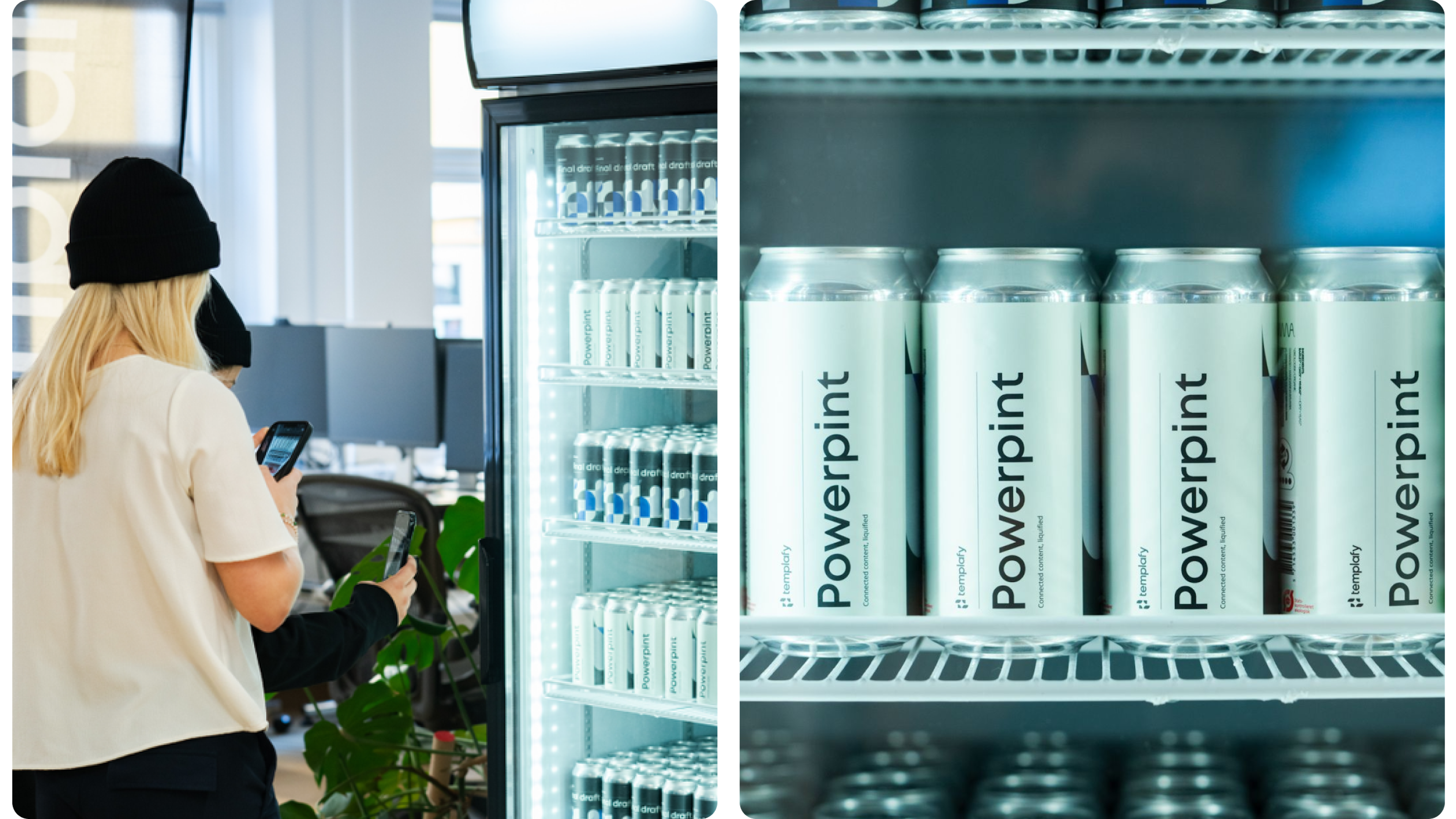
Templaty is a template and document workflow platform that helps teams create content faster and more consistently. That same “clear, structured, modern” vibe translates well into merch. Templaty’s approach is strongest when you design as a set: one palette, one type system, calm placements. The impact isn’t a single hero item—it’s a cohesive brand world. That’s why Cool Merchandise feels credible here: it looks designed, not assembled.
Drinks for office moments
Branded drinks and snacks create repeated brand touchpoints without forcing attention. They work especially well for onboarding, office culture, and event hospitality—small moments that feel premium when the packaging looks intentional and on-brand.
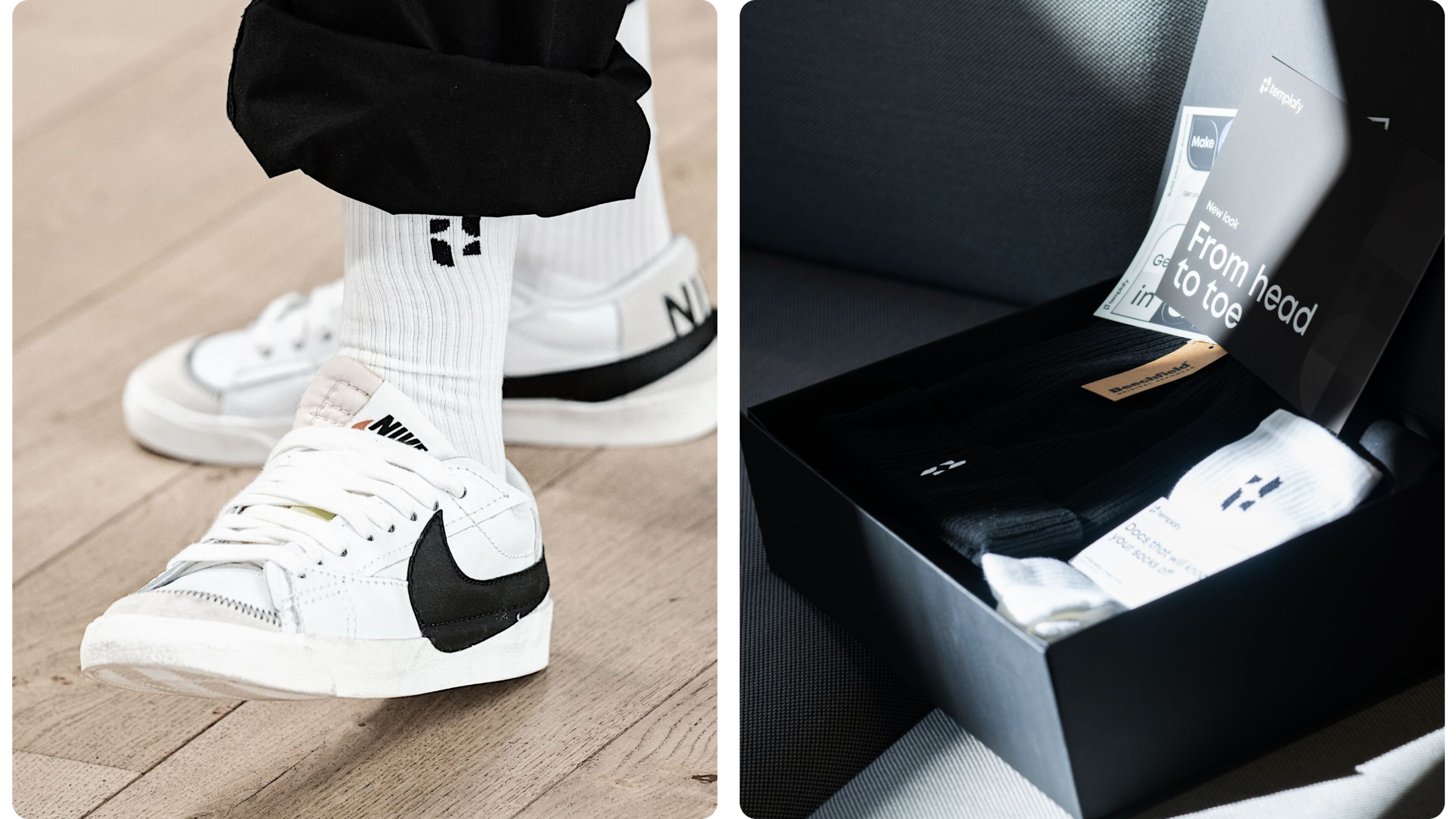
Socks
Custom socks with a subtle logo are a great example of “quiet cool.” They’re wearable, useful, and visible enough—without feeling loud. Keep the design minimal: one mark, one pattern cue, or a small detail in brand color.
Café- and restaurant Merchandise
Restaurant Merchandise works when it feels like lifestyle—not advertising. Cafés and restaurants often have a strong advantage: if the space already has a distinct type style, palette, and mood, you can transfer that identity directly onto merch. Then the product becomes a piece of the experience people want to take home.
If you want more inspiration specifically for restaurant Merchandise, this is a helpful deep dive: Café and restaurant Merchandise ideas.
Åben
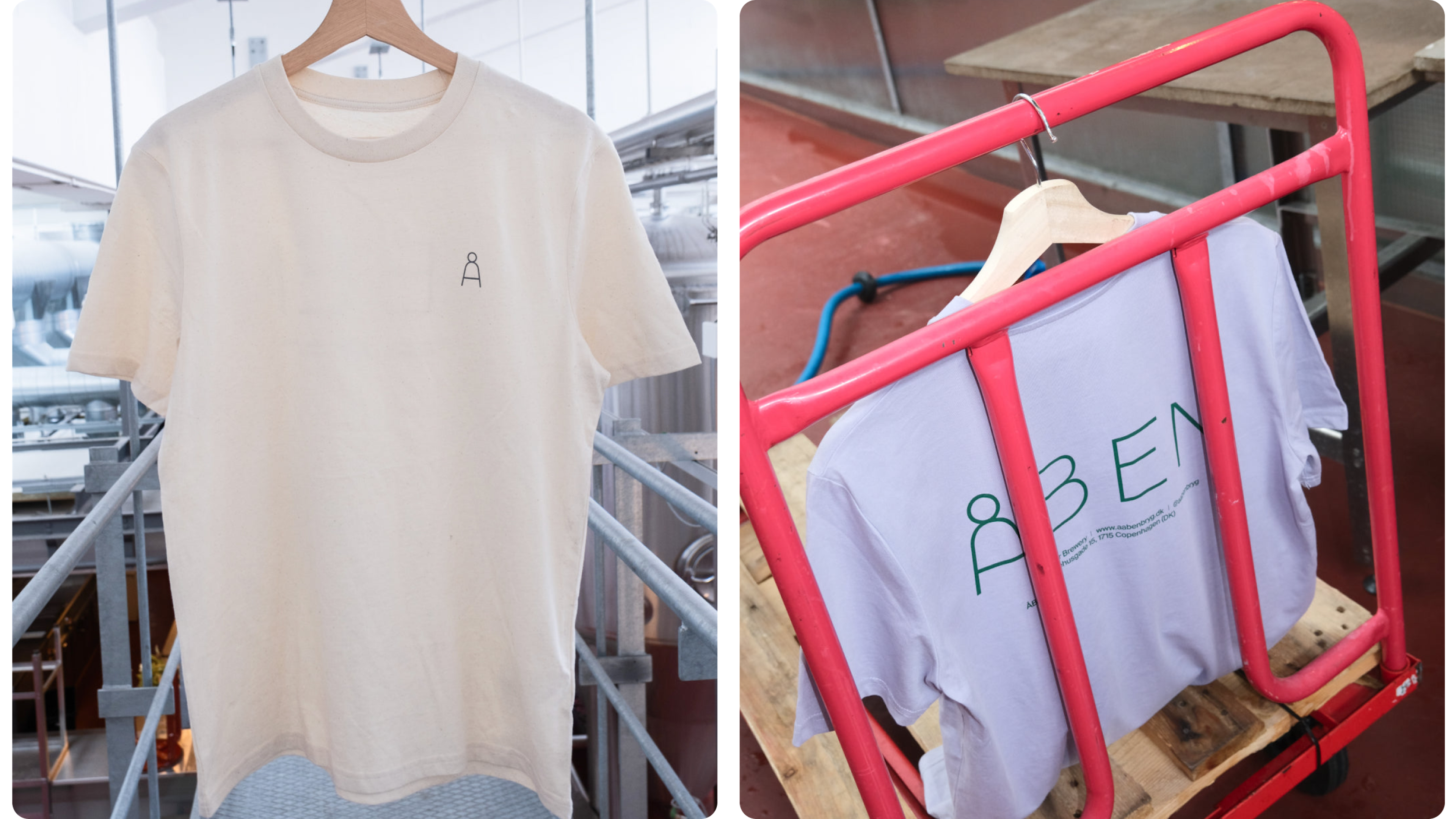
Åben is a Danish craft brewery and bar known for a clean, reduced aesthetic and a modern brand presence. You see the same approach in its merch: minimalism doesn’t feel “too little” here—it feels like intentional design. A calm mark, a precise placement, or a tone-on-tone print is enough because the brand is visually so well-defined. In B2B, that’s a safe route: it works across many audiences and rarely polarises.
A subtly branded T-shirt is the ideal “wearable brand surface” for this< style. What matters is fit and fabric, plus branding that doesn’t dominate the entire front. With minimal design, quality is part of the message—resulting in Cool Merchandise that feels like a favourite tee, not a uniform.
Hart Bageri
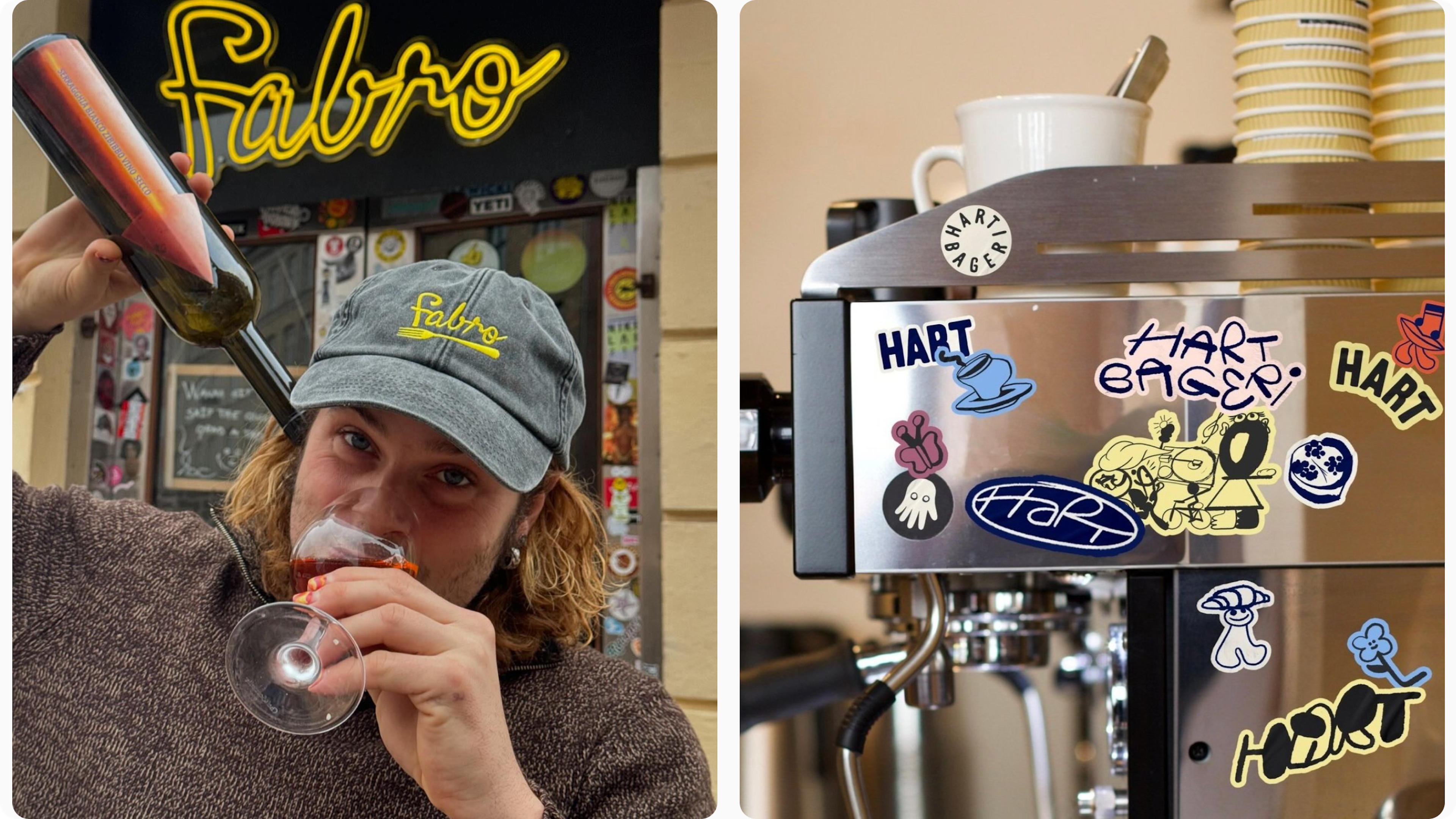
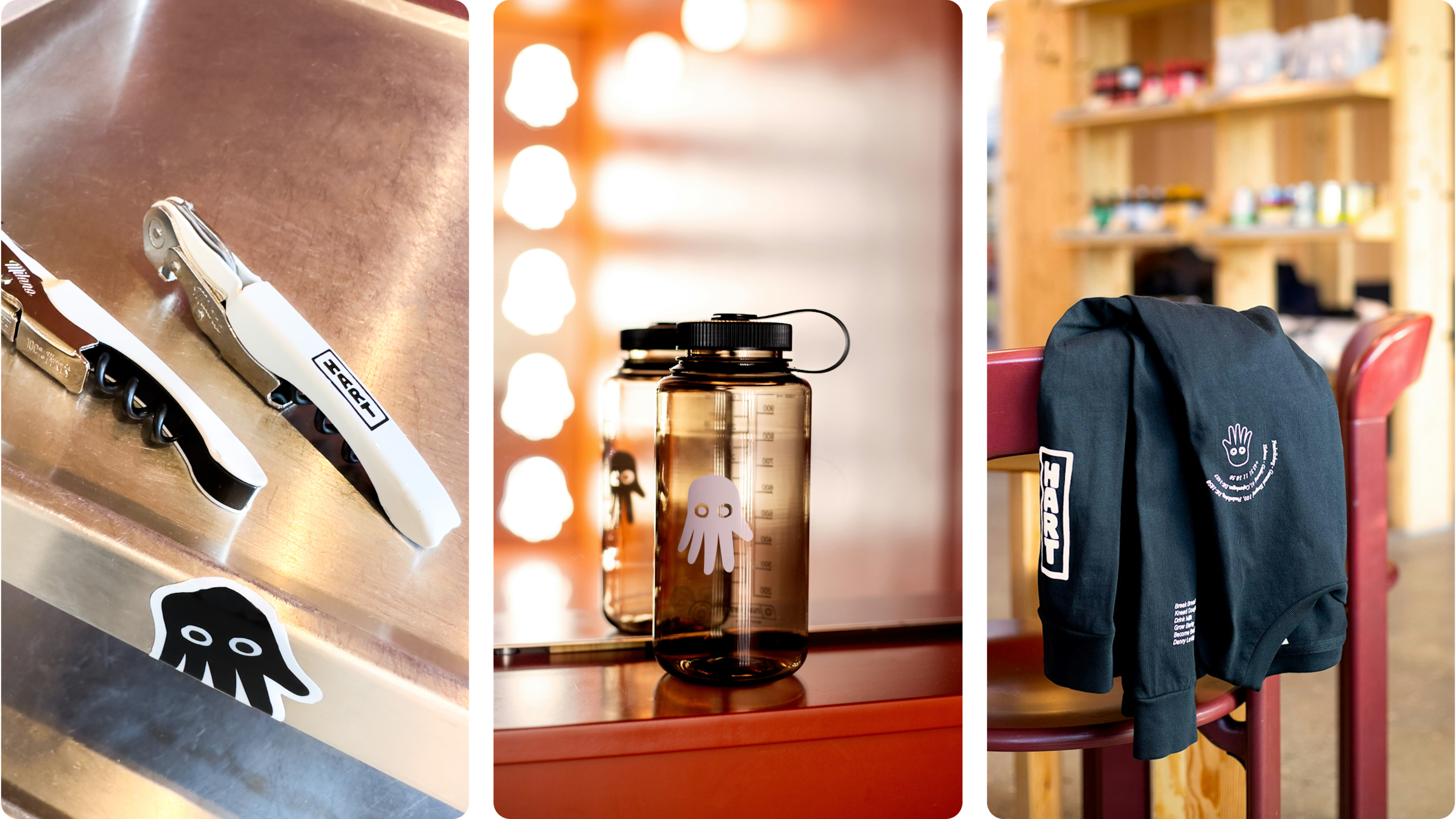
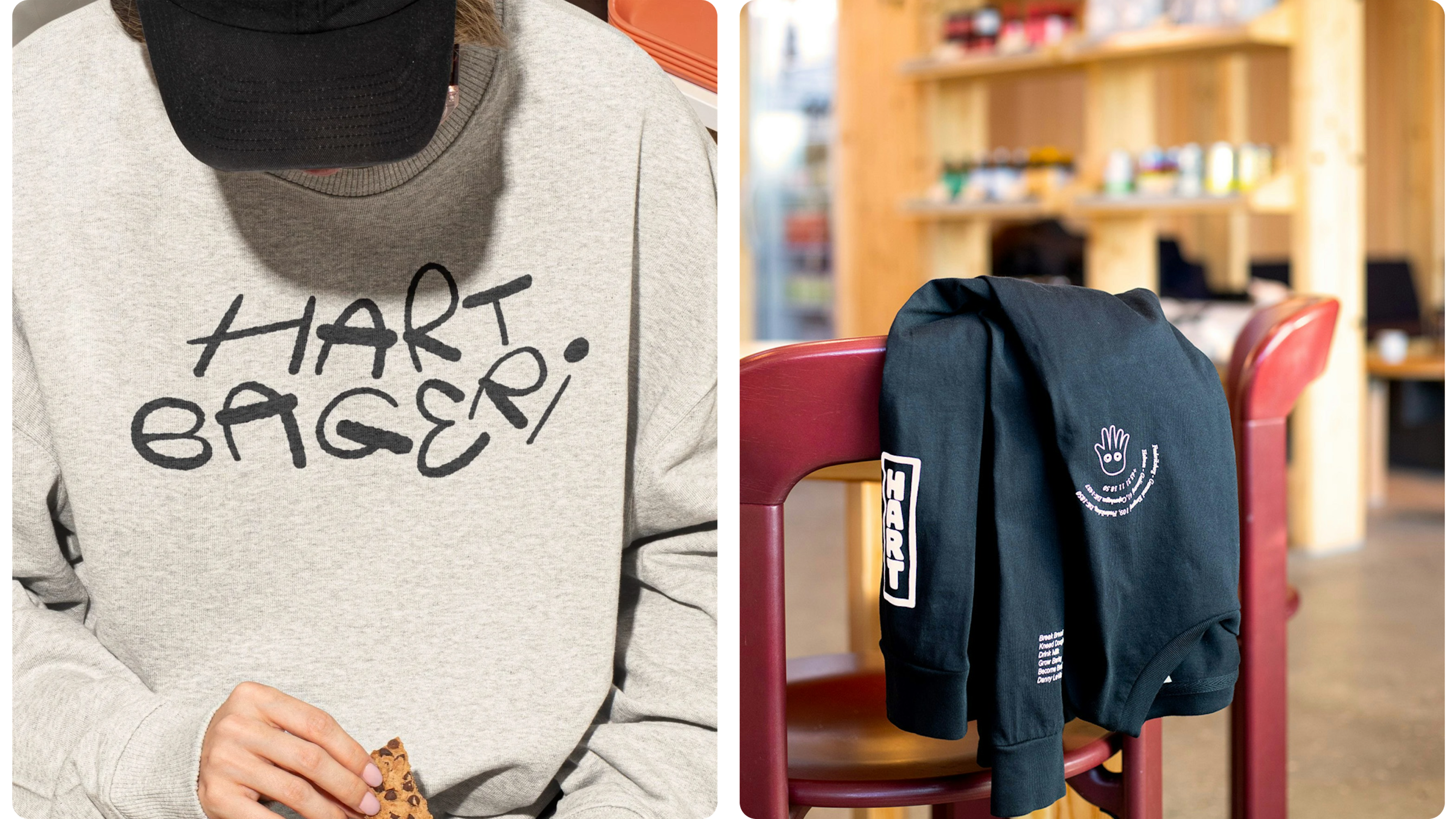
Hart Bageri is a Danish bakery brand known for craft quality, a clear visual identity, and real cult appeal. That everyday-meets-iconic vibe makes merch powerful: it doesn’t read like marketing, it reads like a piece of the brand world. For companies, it’s a strong reminder—if your brand stands for something, merch can make that identity wearable and memorable, with far higher adoption than generic swag.
Milano corkscrew
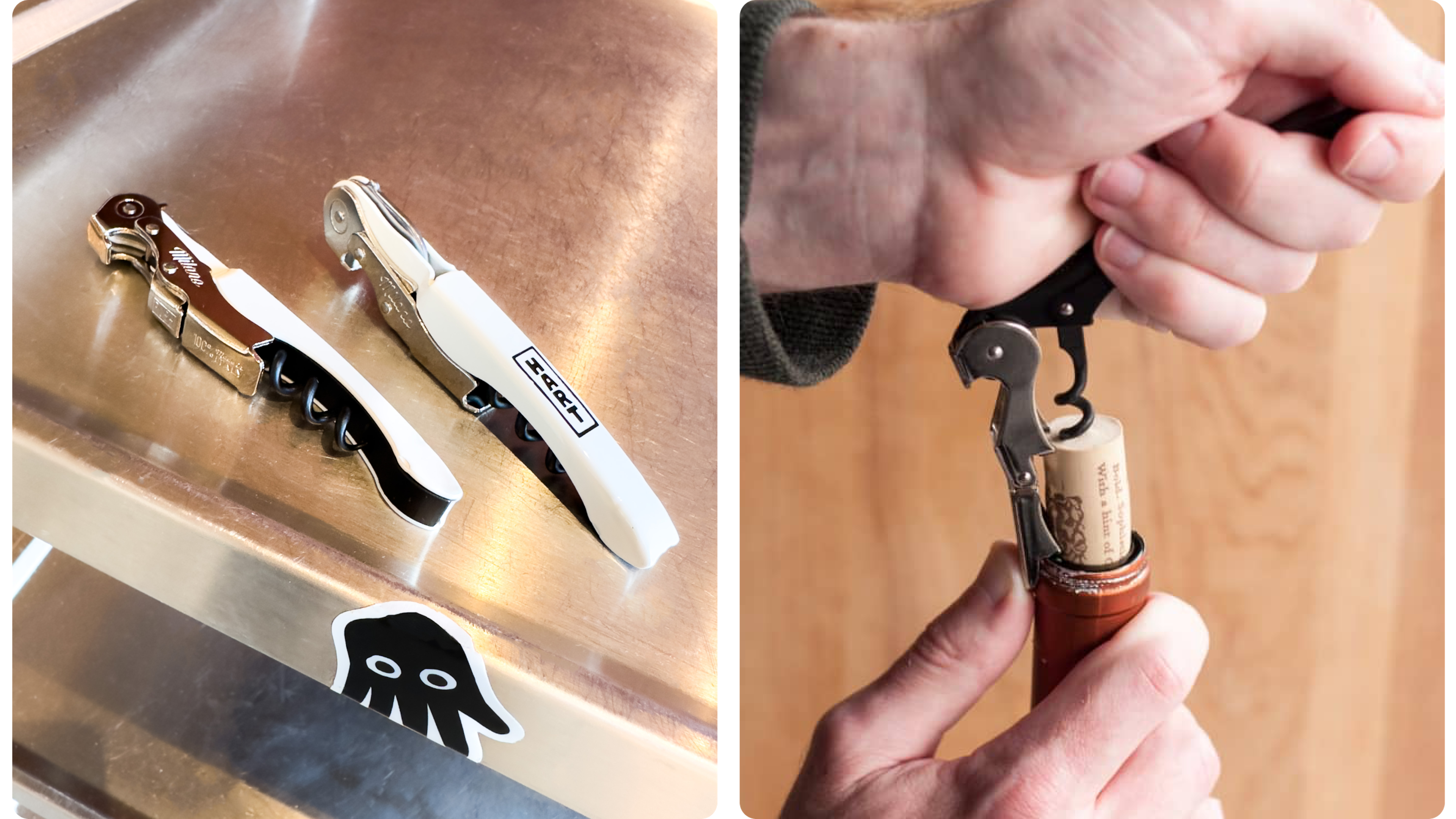
The Milano corkscrew with branding is ideal for partner gifts or standout moments where you want impact over volume. Keep branding subtle so the object feels premium and timeless.
Sweatshirts
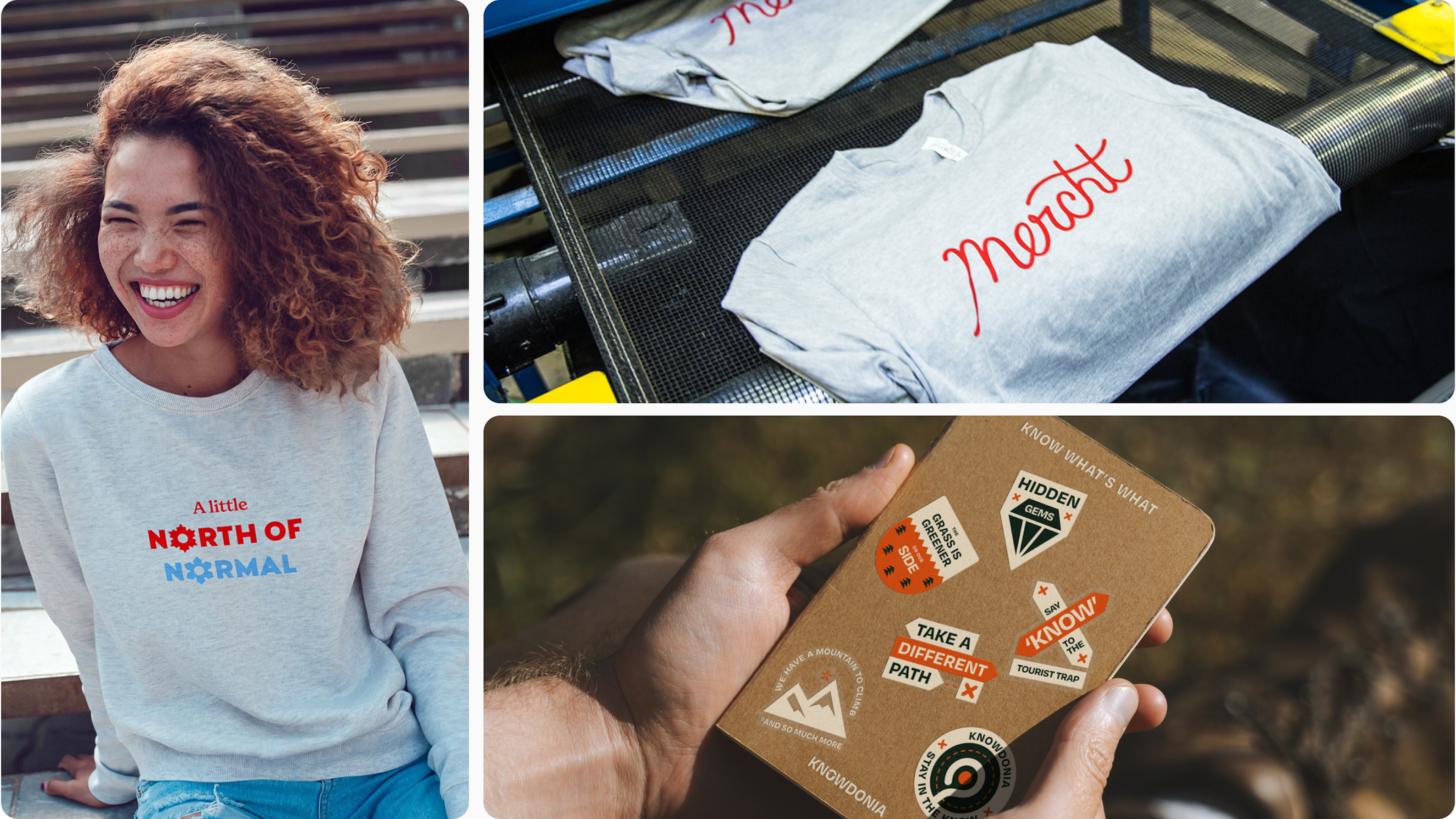
Custom sweatshirts with a clean logo work when comfort and finishing are right. Use calm placements and let the garment quality carry the “premium” message—especially effective for teams and community.
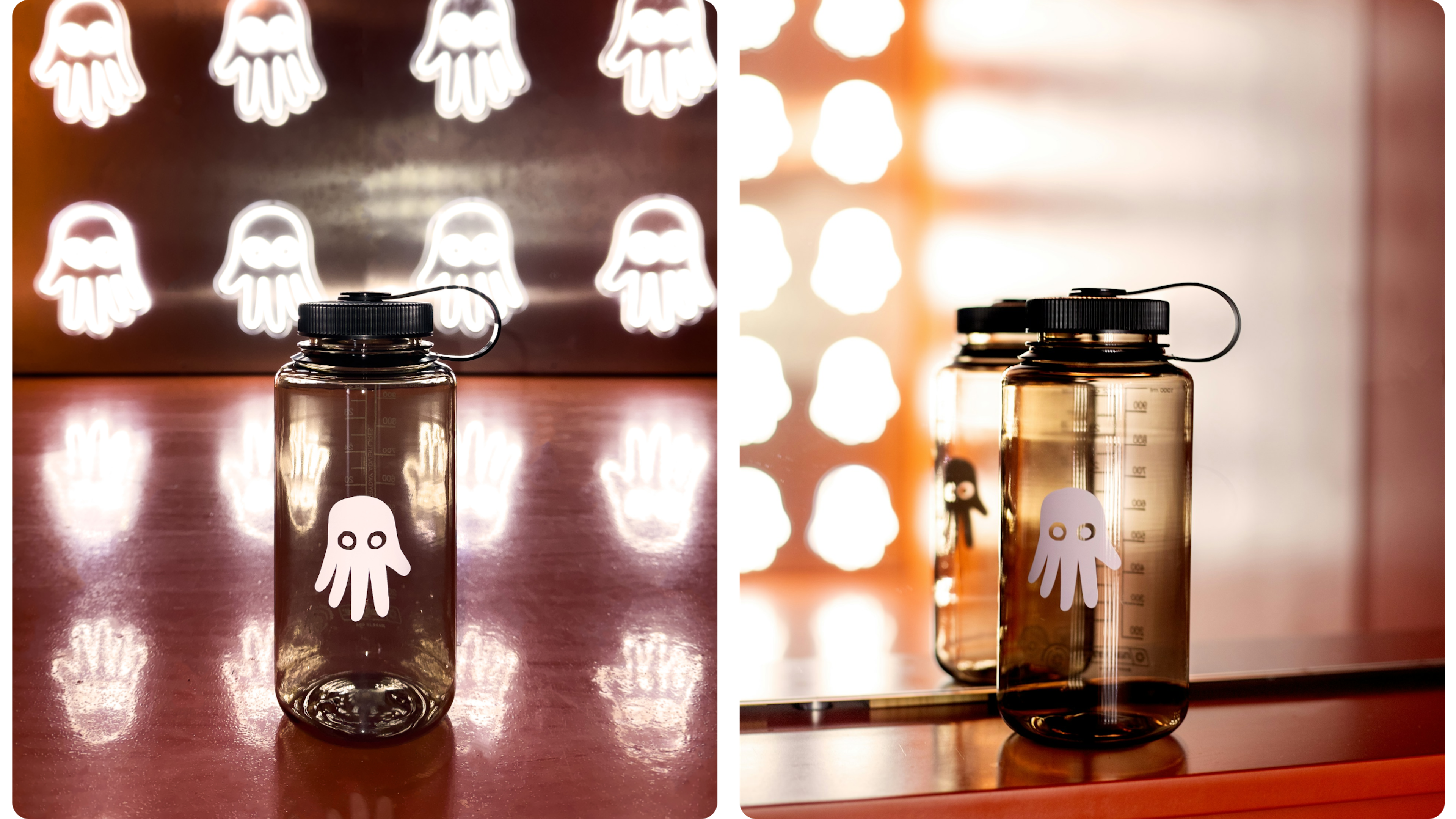
Nalgene bottle
A personalised Nalgene bottle is a high-utility option with excellent repeat exposure. To keep it feeling like Cool Merchandise, match bottle color and print contrast carefully and keep the design simple.
Fabropasta
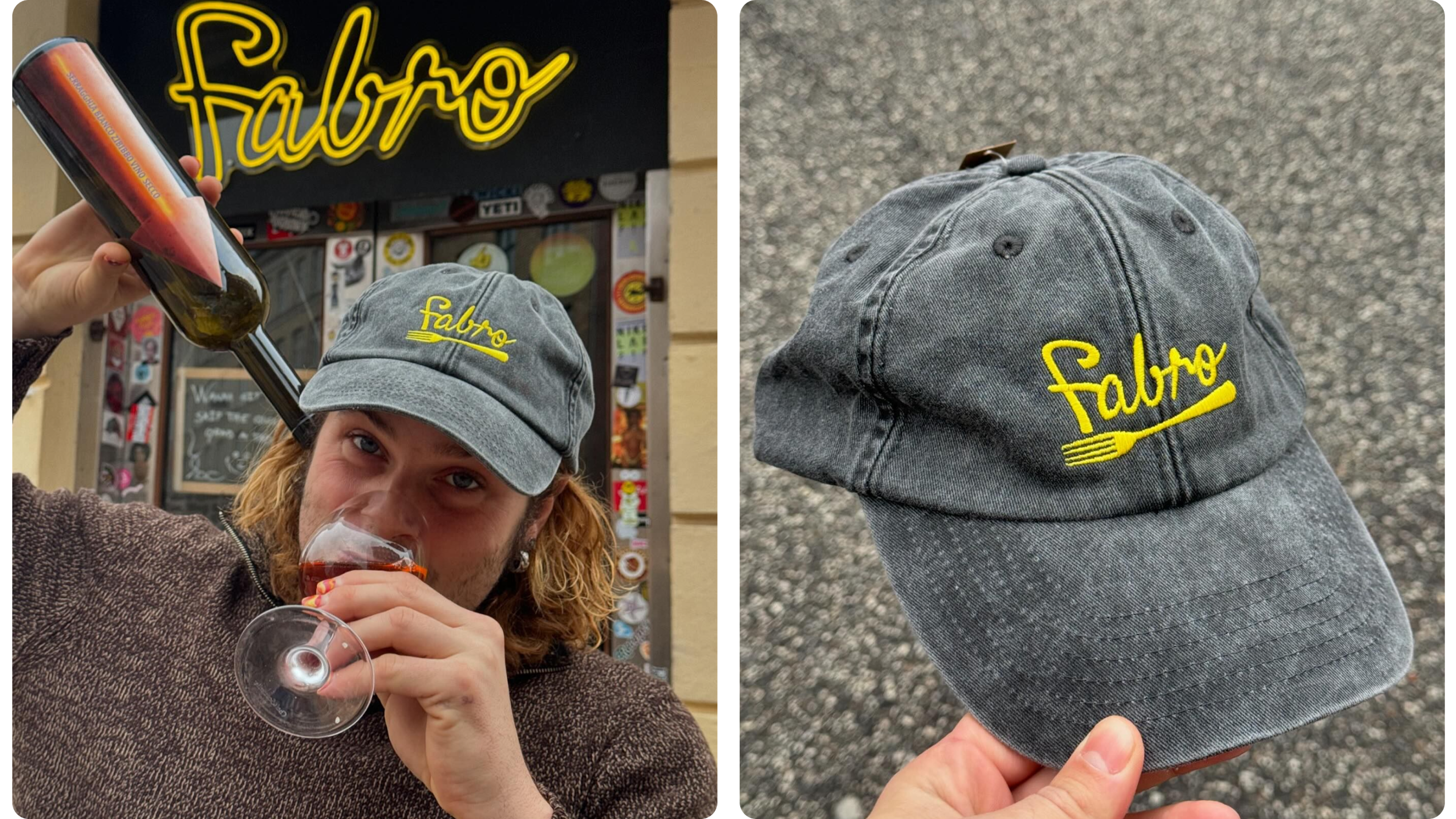
Fabropasta is a food brand that relies heavily on strong visual language—bold motifs, clear typography, and instantly recognisable cues. That’s why the merch can be more of a statement, as long as the design is executed cleanly. Done right, it becomes part of the community rather than just an add-on—especially effective for pop-ups, events, and social moments where the look needs to read instantly in photos.
Caps with a company logo fit this setup particularly well because they’re immediately visible and photograph well. At the same time, they’re demanding: poor embroidery or an awkward fit can ruin the effect fast. The rule here is simple—keep branding reduced, choose a strong placement, and prioritise one clear motif over lots of small details.
How to build a cohesive merch set
A strong set has one anchor item and one or two supporting pieces. The anchor is the high-usage product (tee, bottle, tote). Support pieces add brand texture (socks, drinks, stickers). If everything tries to be the “main item,” the set starts to feel random.
Consistency does the heavy lifting: repeat palette, repeat placement logic, repeat one signature element. That reduces decision effort and makes future reorders and new drops easier—because your Cool Merchandise system stays intact.
A quick quality checklist to avoid “cheap swag”
- Keep placements calm: small marks often look more premium than oversized front prints.
- Match contrast intentionally: tone-on-tone feels high-end; harsh contrast can feel promotional.
- Test the logo small: if it only works big, it won’t look good on most products.
- Choose one message: one strong motif beats five small elements.
- Design for repeat use: the goal is “grab it without thinking.”
Conclusion
Cool Merchandise isn’t about chasing trends—it’s about building a merch system that fits your brand: the right products, consistent design rules, and branding that feels like product design. Define that once, and you can scale from onboarding sets to event drops without starting over each time.
If you want support with selection, finishing, and turning your brand into a cohesive merch set, talk to us: contact Sugarcoat. For more directions and examples, you can also browse Inspiration.
FAQ
What Cool Merchandise works best for B2B teams?
Cool Merchandise performs best when it fits daily routines—tote bags, bottles, socks, and quality tees—paired with branding that feels intentional and on-brand.
How do I make merch look premium instead of promotional?
Use calm placements, a consistent palette, and finishing that matches your identity. Tone-on-tone and minimal marks often look more “designed” than loud prints.
Which cool Merchandise ideas are easiest to combine into a set?
Pick one anchor item (tee, bottle, tote) and add one or two supports (socks, drinks, stickers). Keep the design rules consistent across all items.
What works especially well for restaurant Merchandise?
Restaurant Merchandise works when it feels like lifestyle. Transfer your typography, colors, and mood from the space into the merch so it looks like part of the experience.
What’s the safest branding route if I’m unsure?
Tone-on-tone is usually the safest because it feels premium and broadly acceptable. Bold branding can work too—if you stay strict with palette, typography, and consistency.
Related posts
We're here to support you all the way from design and production to delivery.