10 Personalised socks designs people wear
Socks are easy to get right—if they feel like a product, not a billboard. The real choice is subtle everyday wear or a bold photo-friendly statement. This guide helps you pick a direction fast, with 10 proven examples plus practical notes on branding, budget, and rollout.

What makes socks “work” as company merch
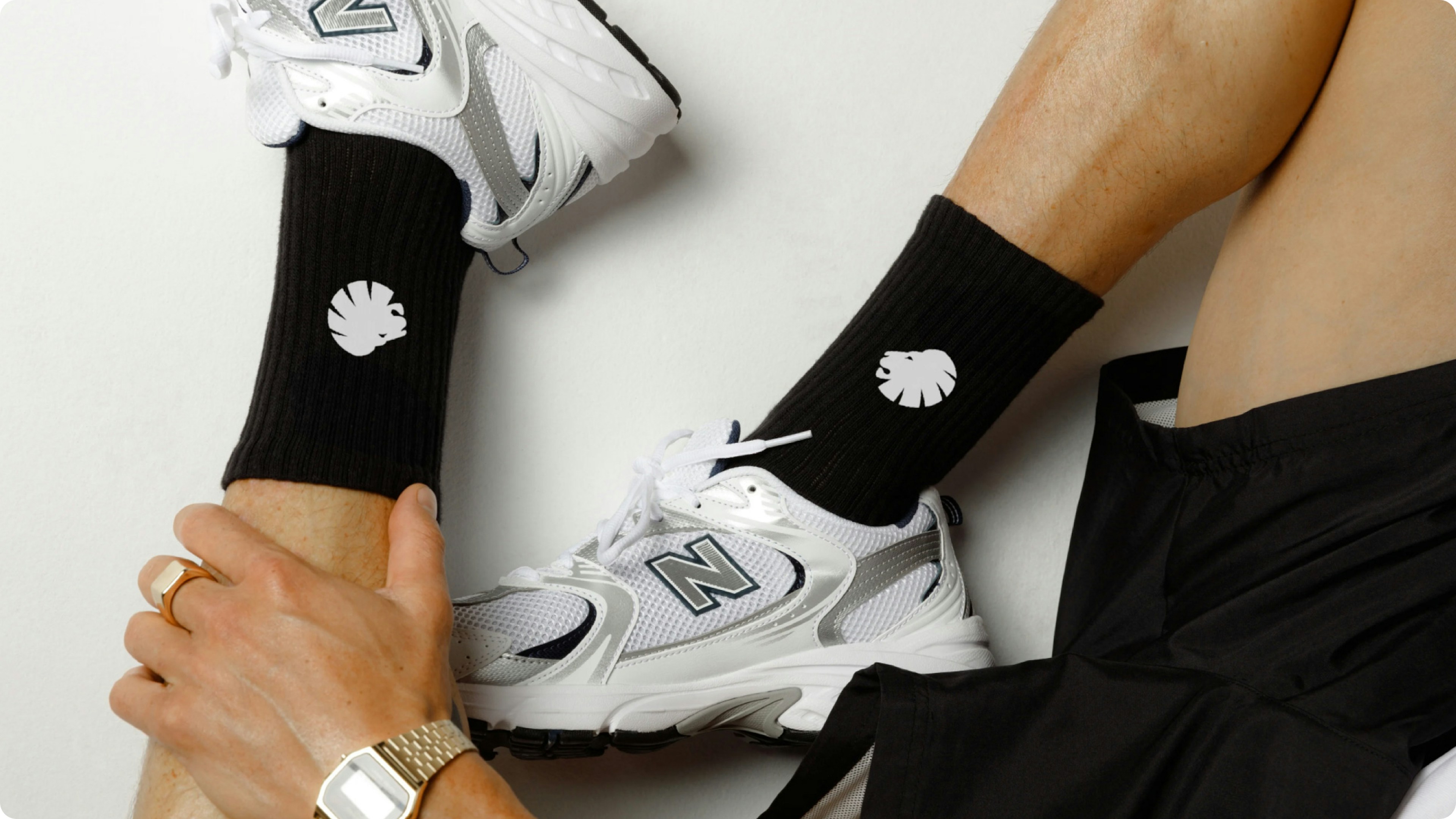
Socks get worn when they’re comfortable and easy to style. That usually means one clear design idea and restrained branding. Loud socks can still work, but only when the pattern is intentional and the logo doesn’t fight for attention.
The other factor is distribution. Socks are light and compact, so they’re ideal for remote shipping and multi-office rollouts, and they fit naturally into new hire welcome kits.
The Sock Signal Checklist
Before you choose a design direction, run this quick checklist. It prevents the most common mistake: trying to squeeze three ideas into one sock.
Wear context
Where will most people wear them—office, travel, gym, weekend?
Brand signal
Do you want “subtle pride” or “visible statement”?
Placement
Pick one primary placement for the mark: cuff, ankle, and/or packaging.
Palette discipline
Two or three colours max is the simplest path to something wearable.
Packaging and handover
Are you handing them out in-person or shipping them? Packaging matters much more when the sock arrives alone.
How to use the 10 examples below
Each example is a design direction you can recreate even if you only offer one base sock style. The point isn’t to copy a brand. It’s to copy the logic: how colour, pattern, typography, and placement work together.
You’ll also notice the same pattern across all ten: the socks logo is either small and well-placed, or it’s replaced by a stronger design system (pattern, monogram, or message).
10 branded designs people wear
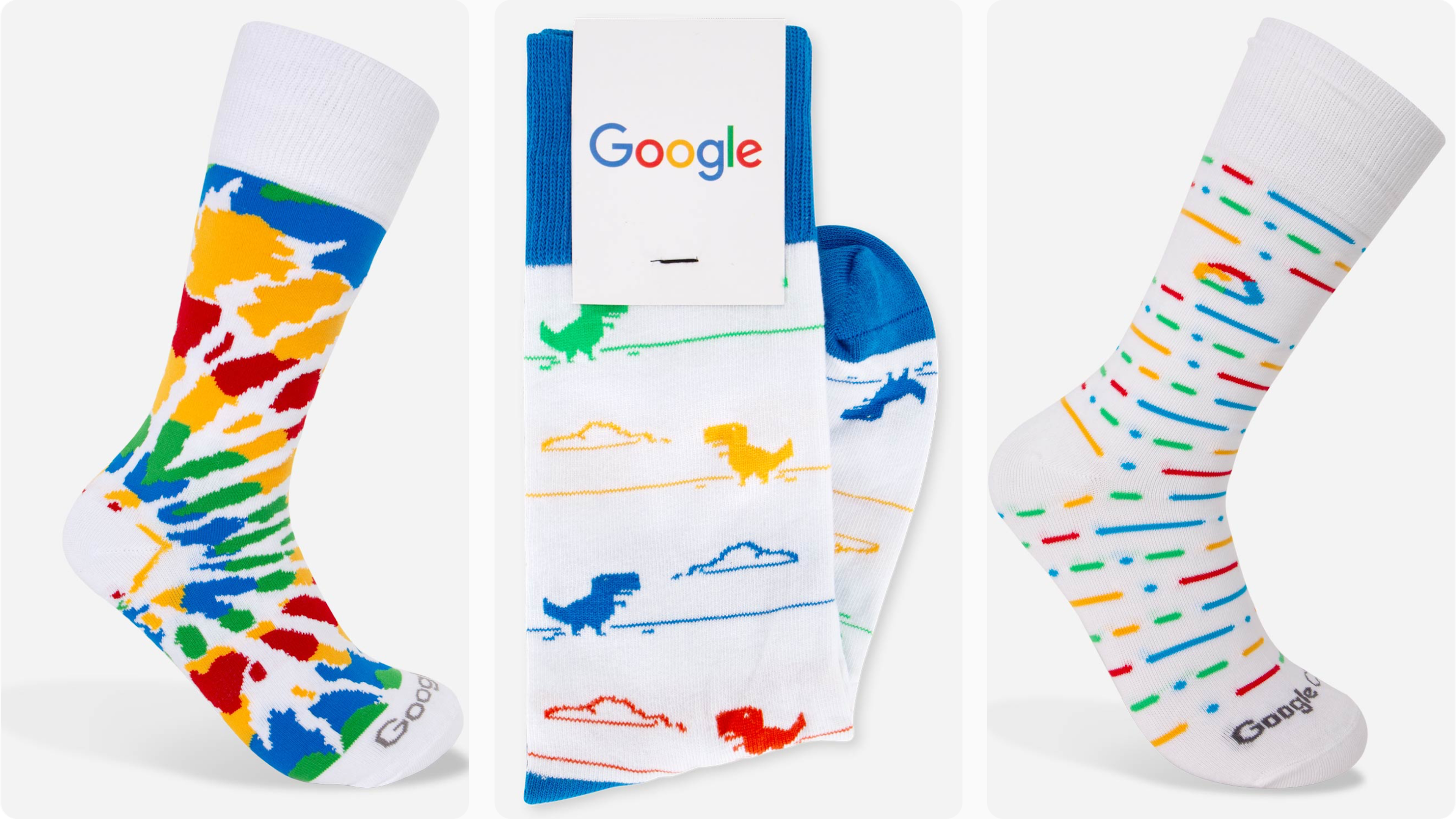
playful pattern, quiet branding
This direction works because the pattern carries the identity, while the brand mark stays small and tidy. It’s great for company-wide drops where you want energy without turning the sock into a billboard.
monogram done right
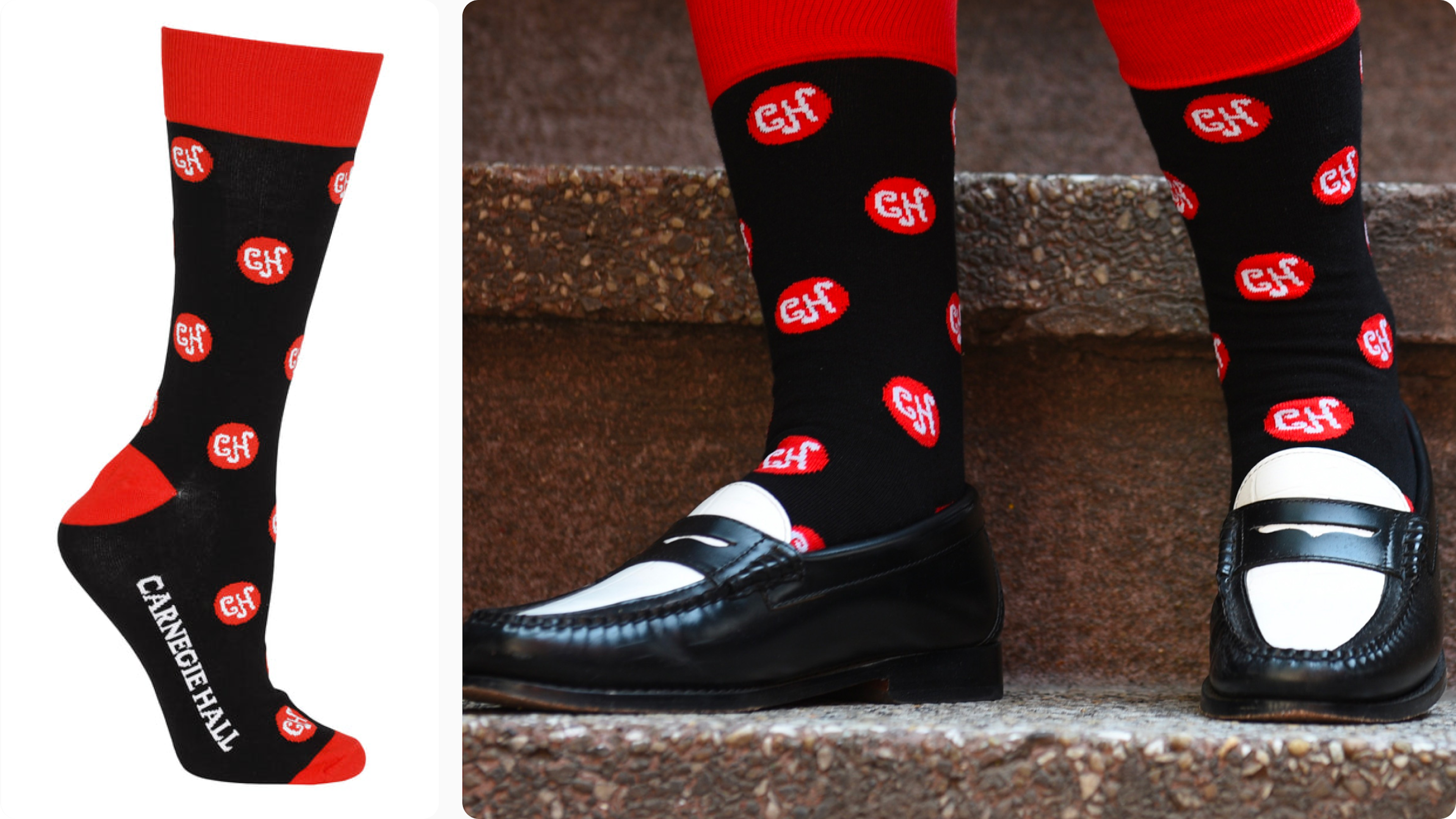
A monogram or repeated symbol looks premium when the base is dark, the contrast is crisp, and the pattern spacing is consistent. This is a safe choice for client gifting and leadership kits because it reads like retail.
Carnegie Hall
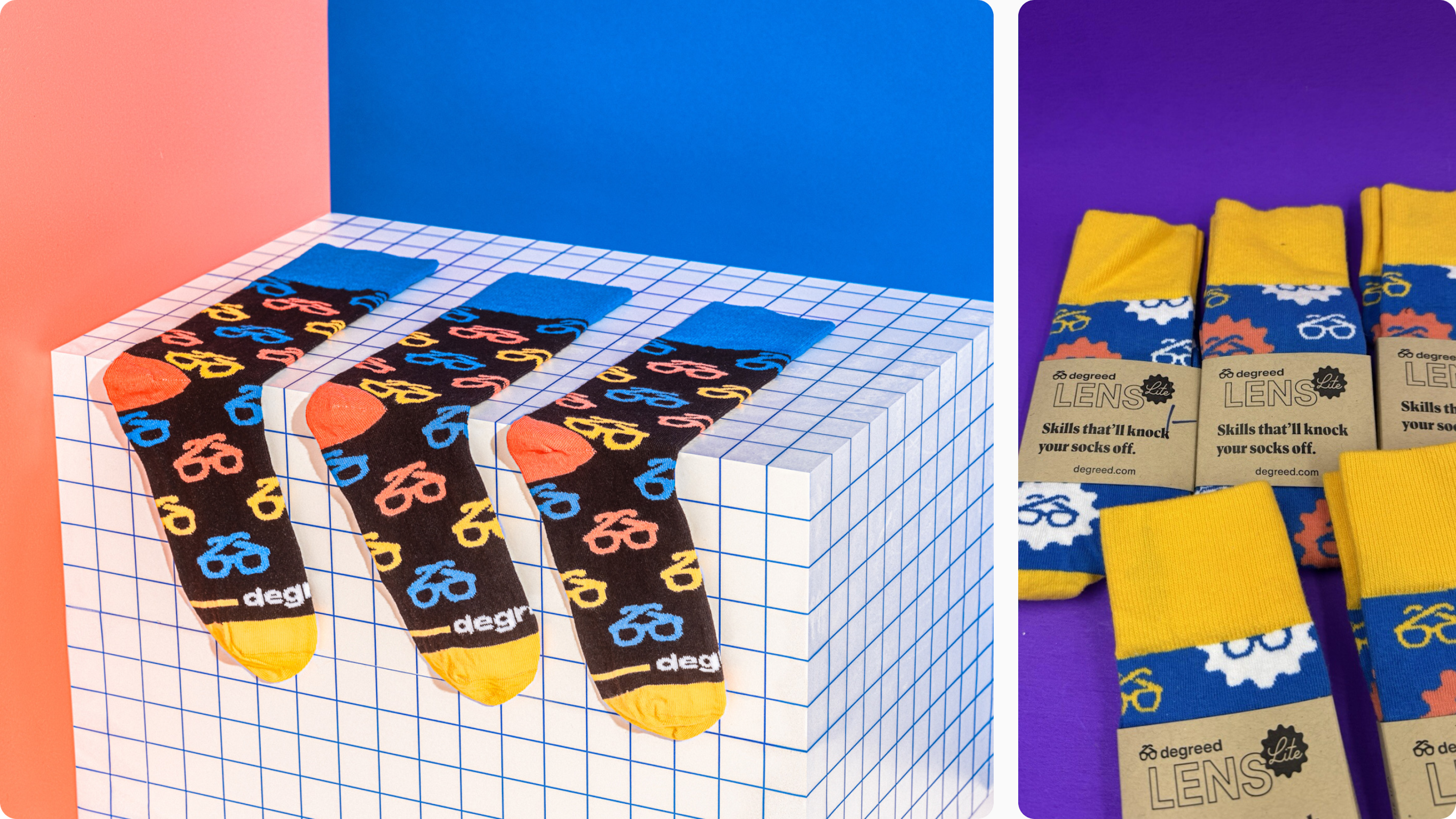
bold pattern plus strong packaging
This is a good example of a sock that’s designed to show up in photos. The colours are confident, but the set feels intentional because the packaging ties everything together. Use this direction for conferences, internal campaigns, and “launch week” moments.
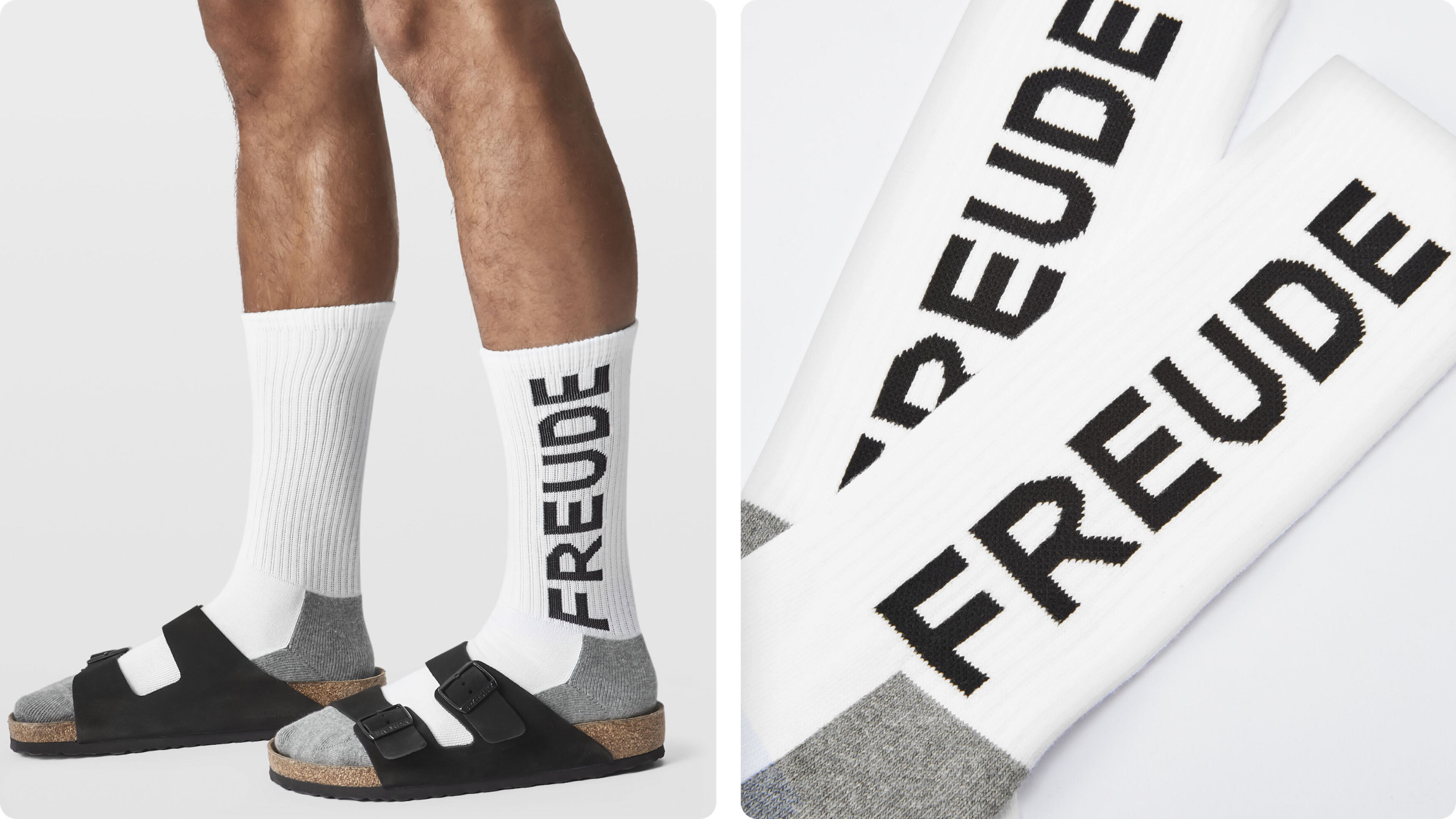
Degreed
sporty argyle with a product-first feel
Sporty socks get worn when they feel like real performance gear: clean knit, strong structure, and a design that looks intentional from a distance. Argyle or geometric panels work well because they’re classic, not gimmicky.
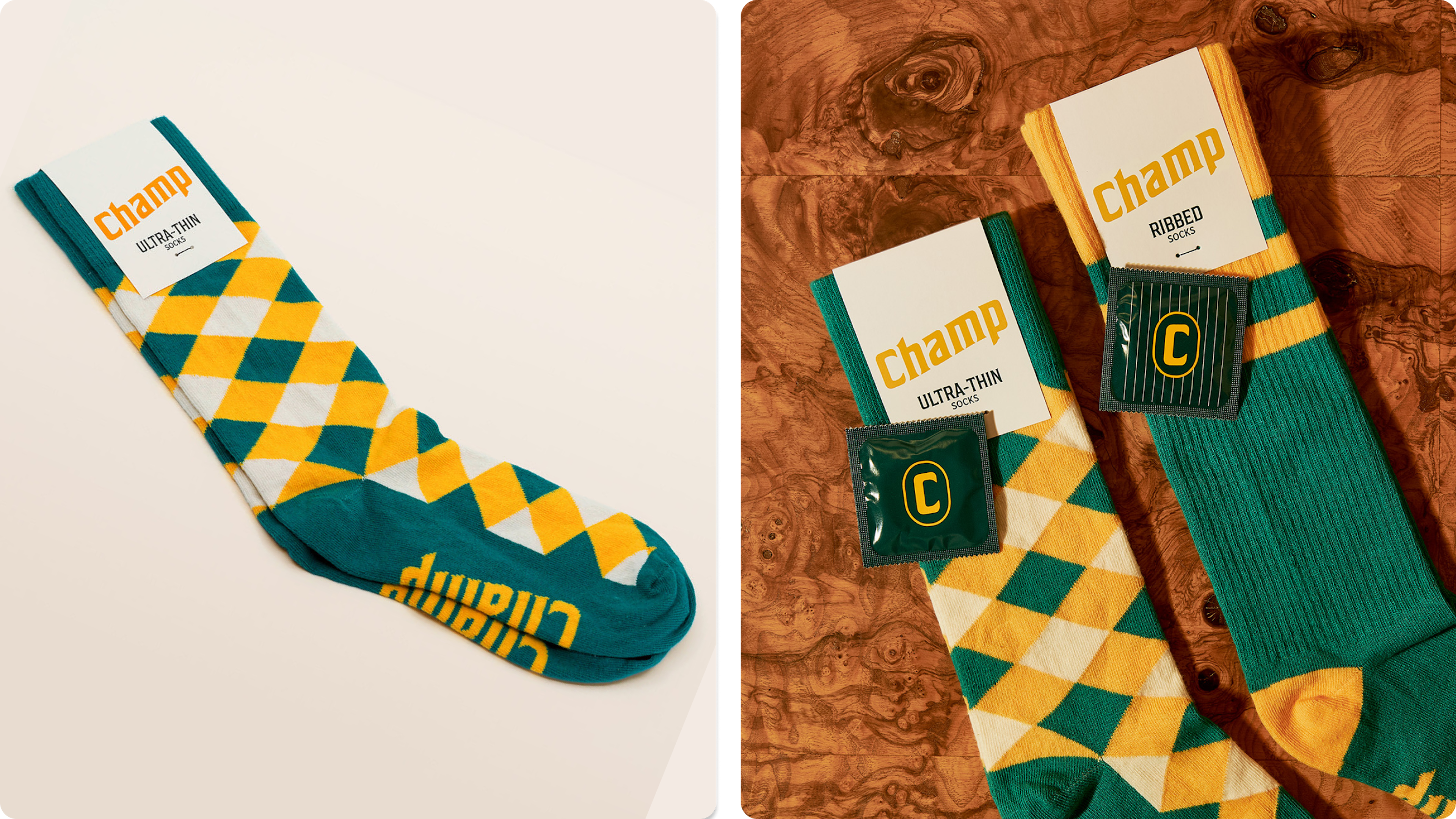
Champ
single icon + “gift” packaging
This is the simplest high-impact approach: one clear icon placed so it reads instantly, plus packaging that does the storytelling. It’s perfect for remote shipping because the unboxing carries the brand moment. Avoid tiny, detailed artwork—icons should be bold and simplified. If you’re shipping to home addresses, build your timeline around address collection and delivery windows.
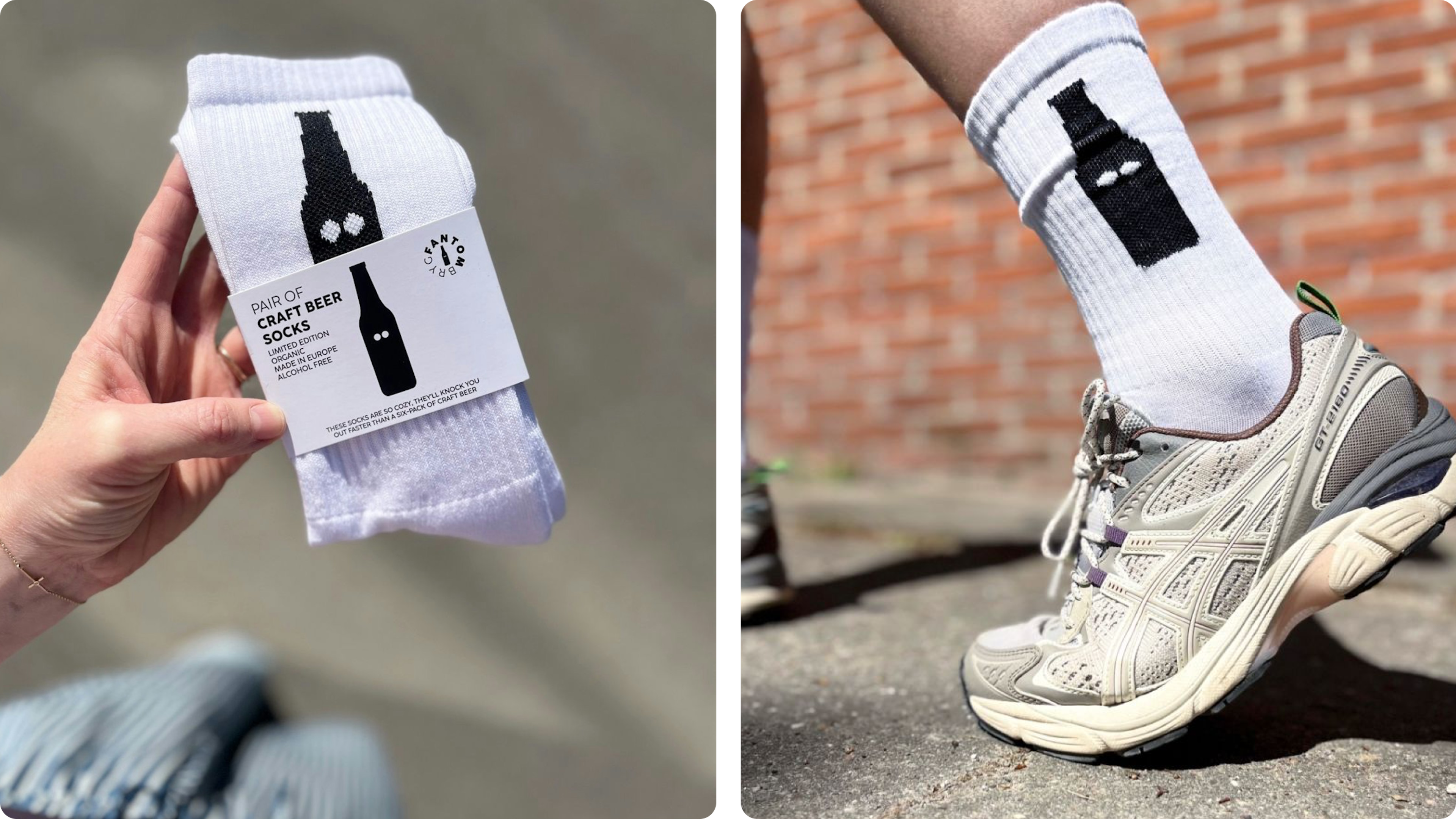
Fantombryg
character storytelling without being novelty
Character socks can still feel grown-up when the illustration style is clean and the palette is controlled. This direction works best for design-forward teams and community culture drops. The trade-off is polarisation—some people love character socks, others won’t wear them. One way to protect wear-rate is to keep the character on the ankle and keep the rest of the sock solid.
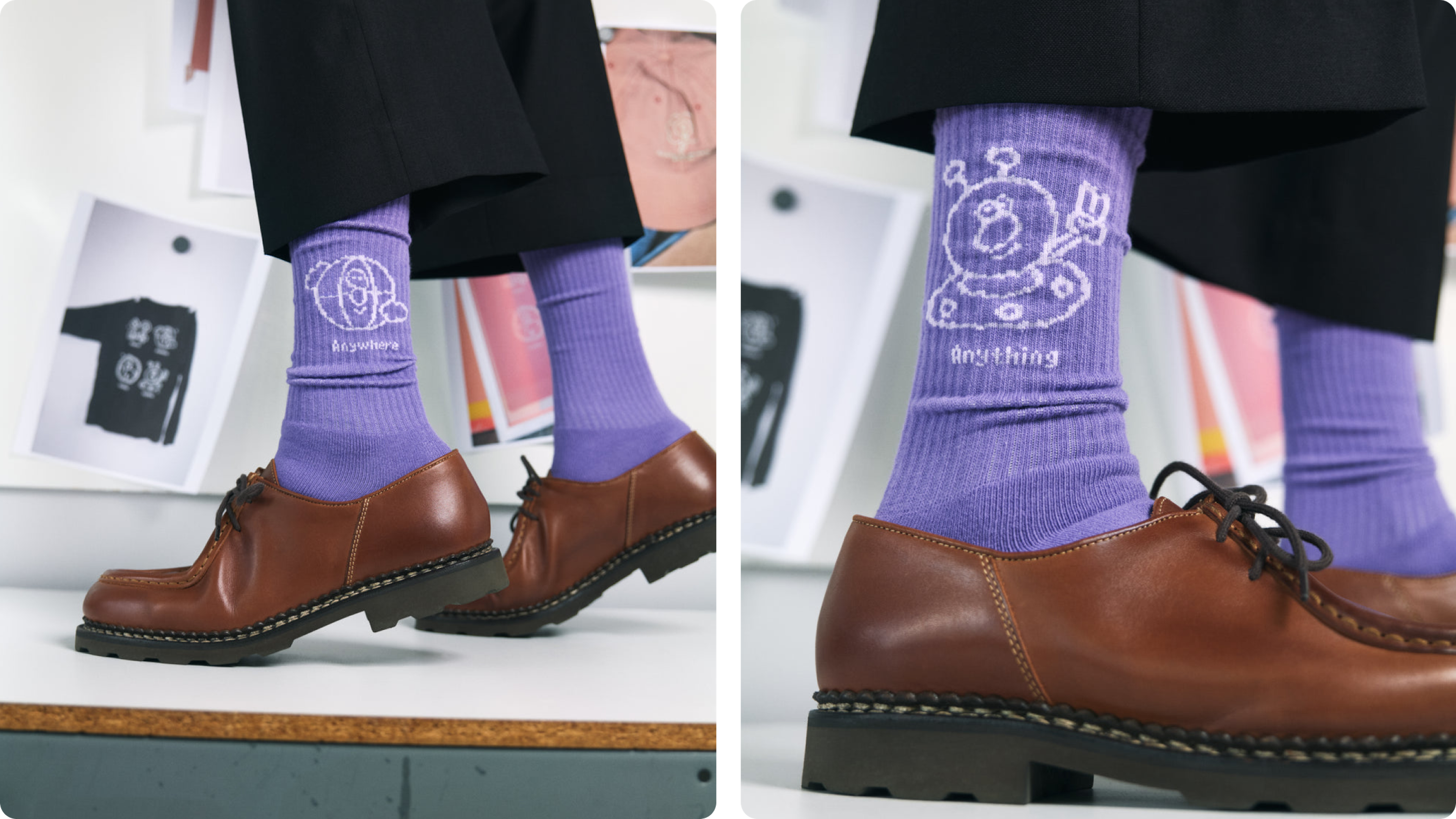
Figma
two-tone message socks (pair strategy)
A clever move for broad audiences is a coordinated pair set: one subtle, one louder, both tied by the same colour system. It gives people a choice, which improves the chance at least one pair gets worn. This is especially useful for teams with mixed preferences.
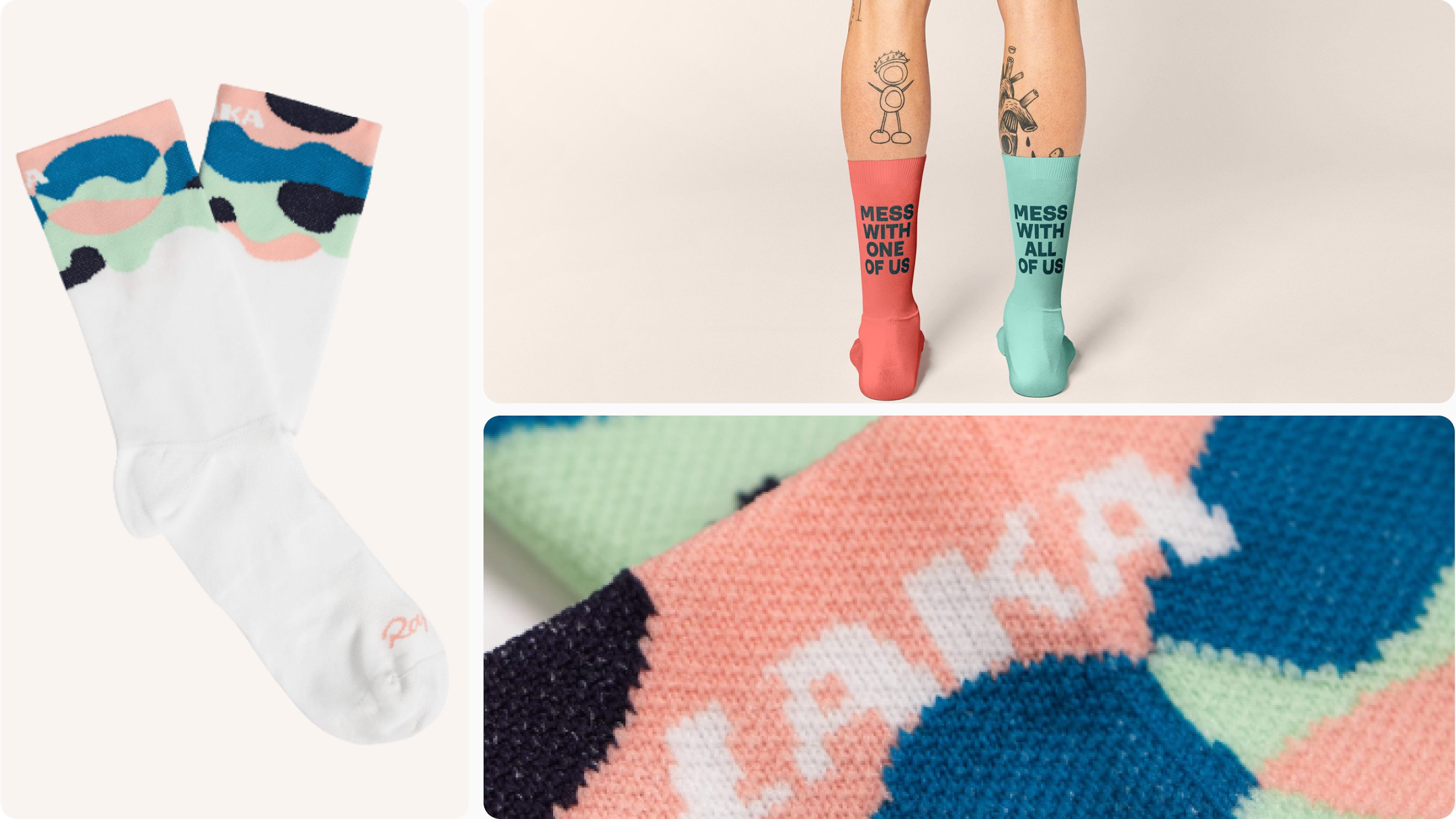
LARK
typographic restraint that still reads
A single word, placed cleanly, can look premium when typography and spacing are right. This direction suits executive gifts, partner kits, and brands that want a confident, minimal signal. The trade-off is brand recognition—if your company isn’t widely recognised, a lone word may not land. In that case, swap the wordmark for a simple icon and keep the same restraint. If you’re bundling, make socks the subtle piece and let another item carry the brand story.
BMW
corporate brand system, modern execution
This shows how to use a brand system (colour blocks, geometry, structured placement) without relying on an oversized logo. It’s a good fit for larger organisations with strict brand rules and a need for broad internal appeal.
KPMG
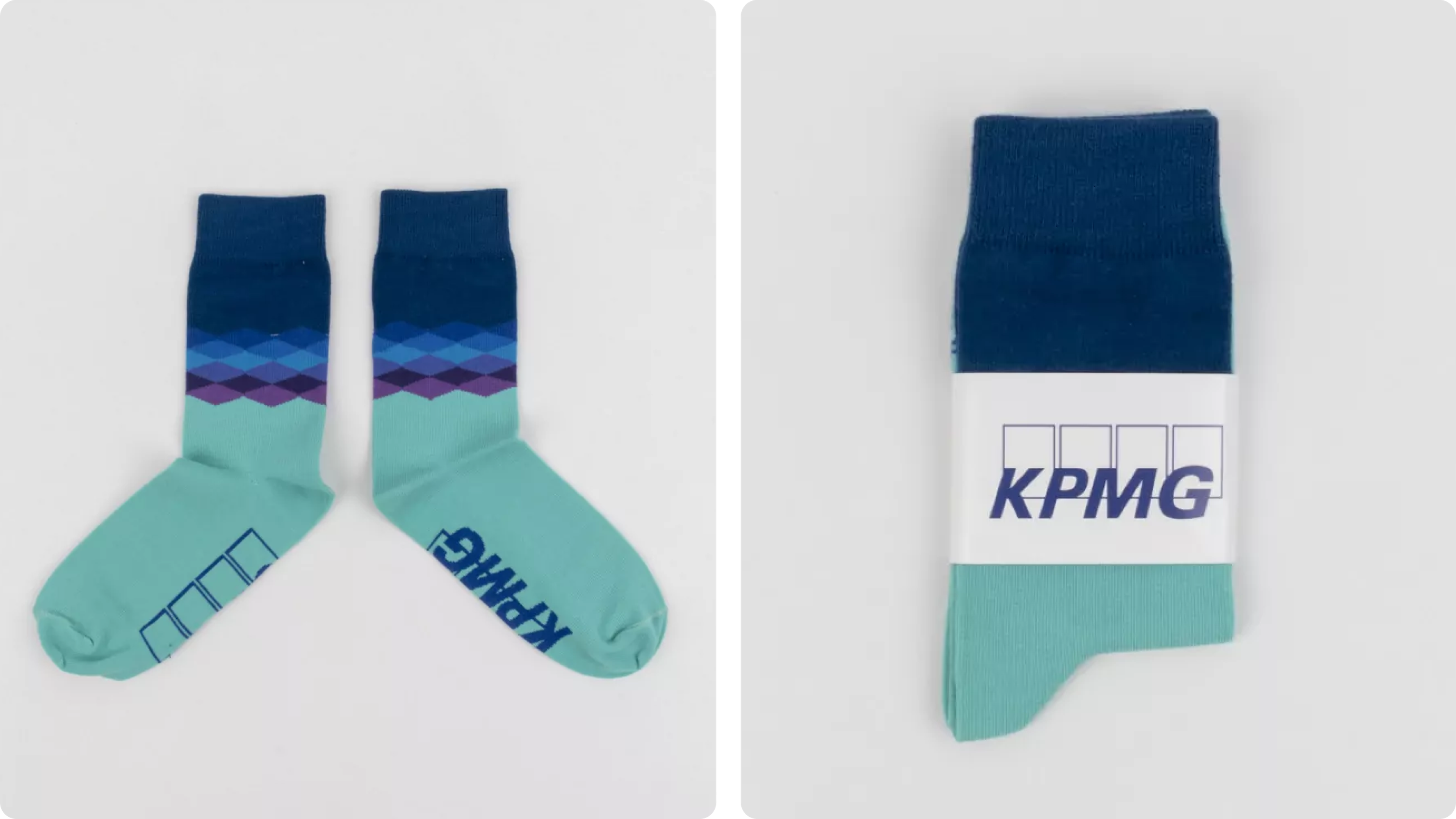
minimalist cuff mark for maximum wear
If your goal is pure wear-rate, this is the direction to copy. A clean base, a small mark near the cuff, and nothing else. It works for company-wide gifting, new joiners, and client kits because it blends into everyday wardrobes.
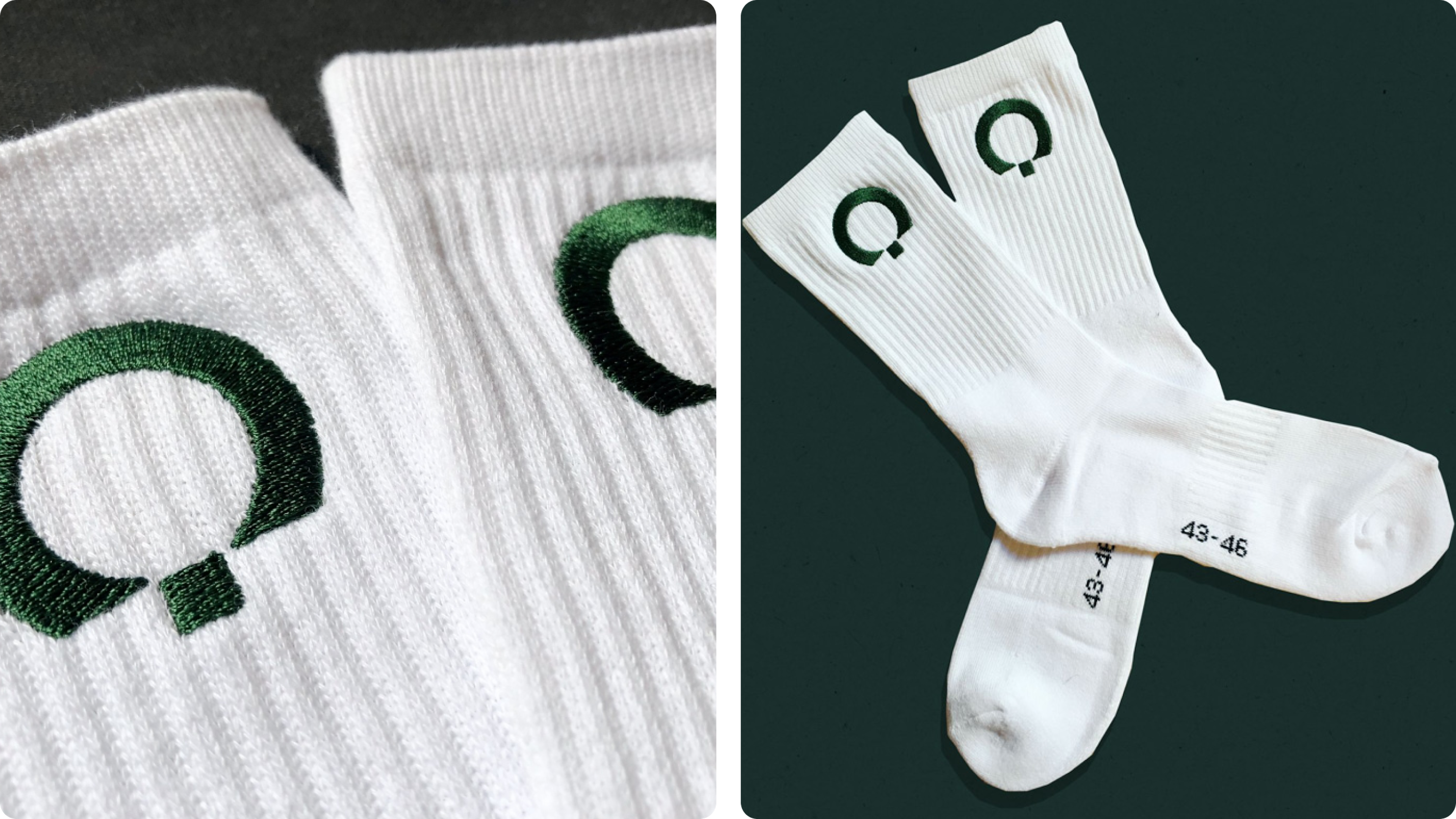
La Mongolfière
Production and minimum order quantities
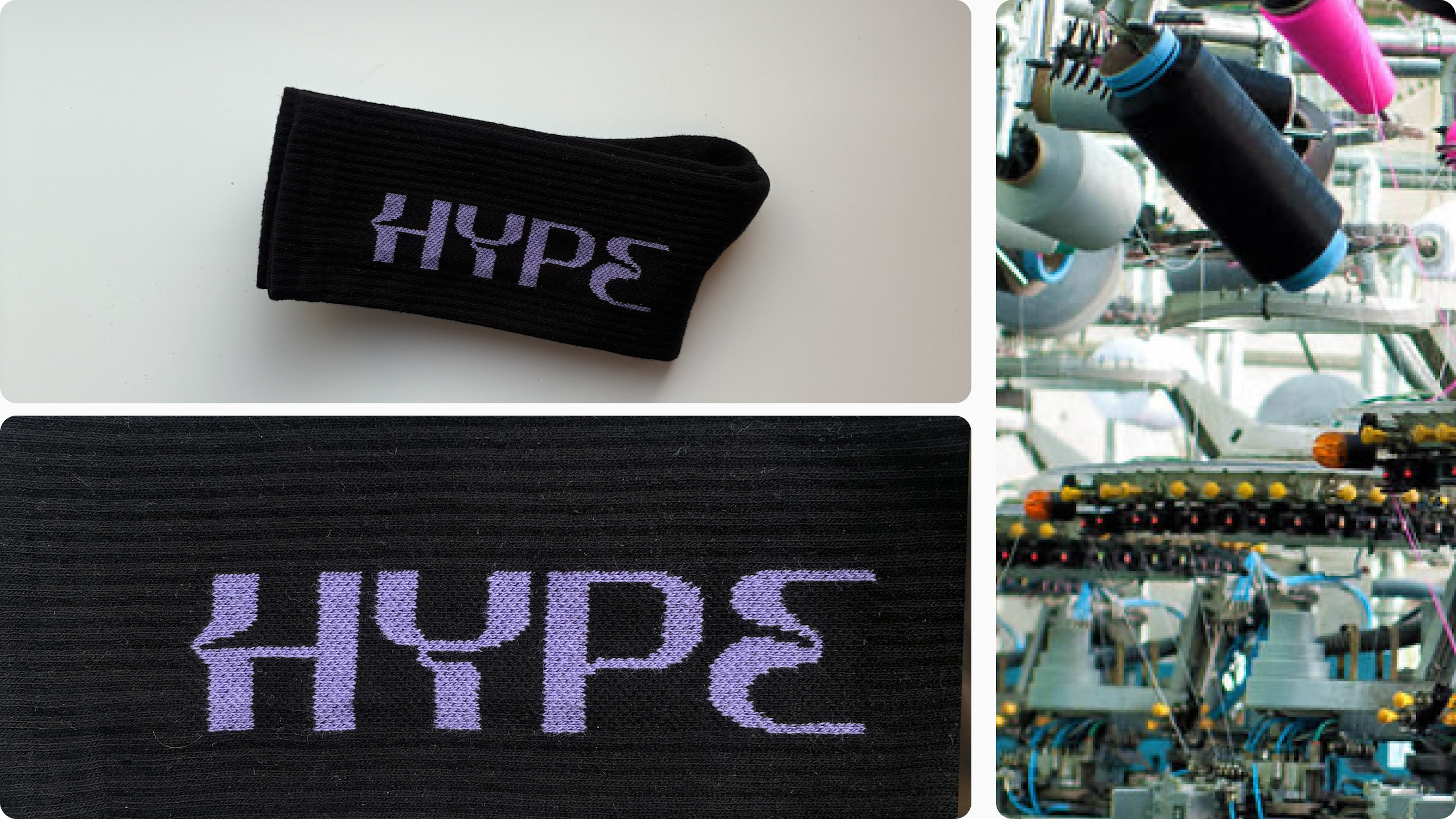
With socks, the production method matters. We don’t print or embroider onto finished socks—your design is knitted in, which is what makes it feel premium and durable. Embroidery can also be uncomfortable in shoes because it adds thickness and creates a raised area that can rub, especially on the toe box or around the ankle. Printing avoids that bulk, but it tends to wear off over time and can look tired quickly after repeated washes.
The trade-off with knitted designs is setup: every new design needs its own a specific knitting pattern, and the machines must be set up with the right yarn colours and tensions before production can start. That’s why the minimum order quantity is 100 pairs per design, and why late design changes can affect timing.
Budget and scale
Budget
At around €10 per person, socks work best as a single, high-wear hero item: one pair, one colourway, one clean logo placement, and nothing that makes the design harder to wear. At around €25 per person, you can make it feel like a gift by adding one or two supporting items—think a branded sleeve plus a short note, or socks bundled with something people use weekly like a notebook, water bottle, or tote. This tier is ideal for onboarding and milestone moments where presentation matters
Scale
For sizing and quantities, plan from 100 people upwards like an operations project. Socks are more forgiving than tops, but you still want a simple size selection (for example: S/M and L/XL) and a clear deadline for people to choose. The bigger the rollout, the more you benefit from standardising choices: one design, as few size variants as possible, and a consistent packing rule—especially if you’re shipping to multiple addresses or distributing across locations.
Conclusion
Choose your lane first: minimal for everyday wear, bold for campaign moments, or system-led for larger organisations with brand guidelines. Then commit to one strong idea—pattern, monogram, icon, or typography—and keep everything else calm.
If you want a simple rule to decide fast: if you’d wear them with your normal shoes and jeans, they’ll perform. If they only make sense as merch, they won’t.
If you’d like help turning one of these directions into a clear brief, quantities plan, and delivery setup, start with Sugarcoat’s custom socks page and share your rollout goals via the contact page.
FAQ
What’s the safest design choice if we want high wear-rate?
Go minimal: dark or white base, small cuff mark, and no big slogans. It’s the easiest way to avoid polarising preferences.
Where should the logo go?
For most teams, cuff or outer ankle is the most wearable.
How do we avoid socks that feel like a giveaway?
Use one clear design idea and upgrade packaging. A sleeve plus a short note turns “merch” into “gift” without adding complexity.
What’s the biggest mistake teams make?
Trying to add more branding to “justify” the cost. Socks look best when the design is confident and simple, and the story is told through packaging or the moment they’re given.
Related posts
We're here to support you all the way from design and production to delivery.